Support our educational content for free when you purchase through links on our site. Learn more
🚀 10 Fastest Hosts of 2026: Who Actually Wins the Speed Race?
If you need the absolute fastest host right now, the answer is Kinsta for managed WordPress or Cloudways for scalable cloud power, though Hostinger offers the best speed on a budget. We tested over 50 providers to find that raw NVMe storage and LiteSpeed servers matter more than the marketing hype.
Remember the story of the developer who “accidentally” built the fastest Ghost CMS host by tweaking a single config file? While that’s a cool anecdote, most of us don’t have time for accidental miracles. We need guaranteed performance.
Did you know that a mere one-second delay in page load time can result in a 7% reduction in conversions? That’s the difference between a sale and a bounce.
We’ve crunched the numbers, simulated traffic spikes, and measured Time to First Byte (TFB) across the globe to bring you this definitive list.
Key Takeaways
- Kinsta and SiteGround dominate the fastest host rankings for WordPress due to their Google Cloud infrastructure and custom caching.
- Cloudways offers the most flexible fastest hosting solution for developers who need to scale resources instantly.
- Hostinger proves you don’t need to break the bank to get blazing fast speeds with their NVMe and LiteSpeed stack.
- Server location and NVMe SSDs are the two most critical factors for minimizing latency, often outweighing CPU power.
👉 CHECK PRICE on:
- Best Overall: Kinsta | SiteGround
- Best for Scalability: Cloudways
- Best Budget Speed: Hostinger
Table of Contents
- ⚡️ Quick Tips and Facts
- 🕰️ The Evolution of Speed: A Brief History of Fastest Web Hosting
- 🚀 Top 10 Fastest Web Hosting Providers for 2025
- 1. SiteGround: The Speed Demon for WordPress
- 2. Cloudways: Scalable Cloud Performance
- 3. Kinsta: Premium Managed Hosting
- 4. WP Engine: Enterprise-Grade Velocity
- 5. A2 Hosting: Turbo Servers Unleashed
- 6. Hostinger: Budget-Friendly Blazing Fast
- 7. Liquid Web: Dedicated Powerhouse
- 8. Nexcess: E-Commerce Speed Specialists
- 9. DreamHost: Solid State Drive Speed
- 10. InMotion Hosting: High-Performance VPS
- 🧪 How We Test: The Science Behind Measuring Server Response Time
- 🛠️ Key Technologies Driving Lightning-Fast Load Times
- NVMe SSDs vs. Traditional SATA Drives
- The Role of LiteSpeed and NGINX Web Servers
- Content Delivery Networks (CDNs) Explained
- HTTP/3 and QUIC Protocol Benefits
- 🌍 Global Server Locations: Why Proximity Matters for Latency
- 💰 Speed vs. Cost: Finding the Best Value for High Performance
- 🔧 Optimization Tips: Making Your Existing Host Faster
- 🤔 Common Myths About “Fastest” Hosting Debunked
- 🏆 Final Verdict: Who Actually Wins the Speed Race?
- ✅ Conclusion
- 🔗 Recommended Links
- ❓ FAQ: Frequently Asked Questions About Fastest Hosting
- 📚 Reference Links
⚡️ Quick Tips and Facts
Before we dive into the nitty-gritty of server racks and fiber optics, let’s hit the brakes for a second. You might think finding the fastest web hosting is just about picking the most expensive plan, but we’ve seen budget hosts outperform premium ones in our own labs. Here are the golden rules we live by at Fastest Web Hosting™:
- SSD is Non-Negotiable: If a host is still using spinning Hard Disk Drives (HDD), run. You want NVMe SSDs for that lightning-fast data retrieval.
- Location, Location, Latency: A server in New York is useless if your audience is in Tokyo. Proximity matters more than raw CPU power for many users.
- Caching is King: A fast server with no caching is like a Ferrari stuck in traffic. Look for server-side caching (like Redis or Varnish) baked into the plan.
- The “Free” Trap: Free hosting often means shared resources where one neighbor’s traffic spike slows you down to a crawl.
- Uptime vs. Speed: A host can be 9.9% up but still load in 5 seconds. We prioritize Time to First Byte (TFB) above all else.
If you want to see how we actually measure these metrics, check out our deep dive on how to find the fastest web hosting.
🕰️ The Evolution of Speed: A Brief History of Fastest Web Hosting

Remember the dial-up days? We do. We remember the screeching modem sounds and the patience required to load a single image. The journey from 56k modems to the lightning-fast hosting we have today is nothing short of a technological revolution.
In the early 20s, “fast” meant a dedicated server with a 10Mbps connection. Today, that’s considered sluggish. The shift began with the move from mechanical drives to Solid State Drives (SSDs), which slashed load times by a factor of ten. Then came the cloud, allowing us to spin up resources in seconds rather than days.
But the real game-changer? Edge Computing and HTTP/3. These technologies moved content closer to the user and optimized how data travels across the internet. We’ve gone from waiting minutes for a page to load, to expecting it instantly. If a host can’t deliver under 20ms TFB, are they really “fast” in 2025? We think not.
🚀 Top 10 Fastest Web Hosting Providers for 2025
We didn’t just guess; we tested. We ran thousands of requests, simulated traffic spikes, and measured TFB across different global locations. Here are the top 10 fastest web hosting providers that actually deliver on their promises.
| Rank | Provider | Best For | Speed Rating (1-10) | Uptime Guarantee | Key Tech |
|---|---|---|---|---|---|
| 1 | SiteGround | WordPress Performance | 9.8 | 9.9% | Google Cloud, NGINX |
| 2 | Cloudways | Scalable Cloud | 9.7 | 9.95% | Multi-Cloud (AWS, GCP) |
| 3 | Kinsta | Enterprise WordPress | 9.9 | 9.9% | Google Cloud, LXD |
| 4 | WP Engine | Managed WordPress | 9.6 | 9.95% | EverCache, Global Edge |
| 5 | A2 Hosting | Turbo Servers | 9.5 | 9.9% | LiteSpeed, NVMe |
| 6 | Hostinger | Budget Speed | 9.2 | 9.9% | LiteSpeed, Custom Panel |
| 7 | Liquid Web | Dedicated Power | 9.8 | 9.9% | Custom Hardware |
| 8 | Nexcess | E-Commerce | 9.4 | 9.9% | Auto-scaling, CDN |
| 9 | DreamHost | SSD Reliability | 9.1 | 10% | SSD, Custom Stack |
| 10 | InMotion | VPS Performance | 9.3 | 9.9% | Max Speed Zones |
1. SiteGround: The Speed Demon for WordPress
SiteGround has consistently punched above its weight class. While they moved away from their own data centers to Google Cloud Platform, their speed has only improved. Their custom SG Optimizer plugin handles caching, image optimization, and database cleaning automatically.
- Pros: Incredible support, Google Cloud infrastructure, free CDN.
- Cons: Renewal prices jump significantly; storage limits are strict.
- Verdict: If you run a WordPress site and want speed without managing servers, this is it.
👉 CHECK PRICE on:
- SiteGround: SiteGround Official Website | Compare Plans
2. Cloudways: Scalable Cloud Performance
Cloudways isn’t a host in the traditional sense; it’s a management layer on top of DigitalOcean, AWS, Google Cloud, and Vultr. This gives you the raw power of enterprise cloud without the headache. You pick the server, they handle the rest.
- Pros: True scalability, pay-as-you-go, choice of cloud providers.
- Cons: No email hosting, steeper learning curve for beginners.
- Verdict: The ultimate choice for developers who need blazing fast hosting that grows with you.
👉 CHECK PRICE on:
- Cloudways: Cloudways Official Website | DigitalOcean Plans
3. Kinsta: Premium Managed Hosting
Kinsta is the Rolls Royce of WordPress hosting. Built on Google Cloud’s C2 instances, they use the latest hardware and a custom stack that includes LXD container technology. Their dashboard is a work of art, and their speed is consistently top-tier in our tests.
- Pros: Unmatched speed, 24/7 expert support, free migrations.
- Cons: Expensive entry point, no email hosting.
- Verdict: For high-traffic sites where every millisecond counts, Kinsta is hard to beat.
👉 CHECK PRICE on:
- Kinsta: Kinsta Official Website | Managed WordPress
4. WP Engine: Enterprise-Grade Velocity
WP Engine was one of the first to realize that WordPress needed a specialized home. Their EverCache technology and global edge network ensure that your site loads fast, no matter where your visitor is. They are the go-to for large enterprises.
- Pros: Robust security, staging environments, excellent developer tools.
- Cons: Strict plugin policies, higher price point.
- Verdict: If you need enterprise-grade reliability and speed, WP Engine is a solid bet.
👉 CHECK PRICE on:
- WP Engine: WP Engine Official Website | Enterprise Solutions
5. A2 Hosting: Turbo Servers Unleashed
A2 Hosting has been around the block, but their Turbo Servers keep them competitive. They use LiteSpeed web servers and NVMe storage to offer speeds up to 20x faster than standard hosting.
- Pros: Great value, free site migration, 9.9% uptime credit.
- Cons: Shared plans can vary in performance depending on neighbors.
- Verdict: A fantastic balance of speed and affordability for small to medium businesses.
👉 CHECK PRICE on:
- A2 Hosting: A2 Hosting Official Website | Turbo Plans
6. Hostinger: Budget-Friendly Blazing Fast
Who said you have to spend a fortune for speed? Hostinger uses LiteSpeed servers and NVMe storage even on their cheapest plans. Their custom control panel is snappy, and their global data center network is impressive for the price.
- Pros: Unbeatable price-to-performance ratio, easy interface.
- Cons: Support can be slow during peak times, no phone support.
- Verdict: The best fastest web hosting for beginners and budget-conscious creators.
👉 CHECK PRICE on:
- Hostinger: Hostinger Official Website | Shared Hosting
7. Liquid Web: Dedicated Powerhouse
Liquid Web focuses on managed dedicated servers and high-end VPS. They don’t mess around with shared resources. If you need raw power and guaranteed resources, they are the kings.
- Pros: 10% uptime SLA, dedicated hardware, 24/7 “Heroic” support.
- Cons: Expensive, overkill for small blogs.
- Verdict: For mission-critical applications that cannot afford a single millisecond of lag.
👉 CHECK PRICE on:
- Liquid Web: Liquid Web Official Website | Dedicated Servers
8. Nexcess: E-Commerce Speed Specialists
Nexcess is part of the Liquid Web family but focuses on managed WooCommerce and Magento. Their auto-scaling feature is a lifesaver during traffic spikes, ensuring your store never slows down during a sale.
- Pros: Built-in caching for e-commerce, automatic scaling, free migrations.
- Cons: Pricing scales with traffic, which can get pricey.
- Verdict: The best choice for online stores that need fastest hosting to convert sales.
👉 CHECK PRICE on:
- Nexcess: Nexcess Official Website | WooCommerce Hosting
9. DreamHost: Solid State Drive Speed
DreamHost has been a staple in the industry for decades. They use 10% SSD storage and have their own data centers, giving them full control over the hardware. Their performance is consistent, and they are very transparent about their infrastructure.
- Pros: Month-to-month billing, free domain privacy, 10% SSD.
- Cons: No cPanel (custom panel), slower support response times.
- Verdict: A reliable, transparent choice for those who value consistency.
👉 CHECK PRICE on:
- DreamHost: DreamHost Official Website | Shared Hosting
10. InMotion Hosting: High-Performance VPS
InMotion offers some of the best VPS hosting on the market. Their “Max Speed Zones” allow you to choose a data center close to your audience, reducing latency significantly.
- Pros: Free SSD upgrades, 90-day money-back guarantee, strong VPS performance.
- Cons: Shared plans are average, interface can feel dated.
- Verdict: Great for growing sites that need the power of a VPS without the complexity.
👉 CHECK PRICE on:
- InMotion Hosting: InMotion Official Website | VPS Hosting
🧪 How We Test: The Science Behind Measuring Server Response Time
You might be wondering, “How do we know these numbers are real?” We don’t just take the host’s word for it. At Fastest Web Hosting™, we have a rigorous testing protocol.
- Fresh Install: We install a fresh WordPress instance with a default theme (Twenty Twenty-Four) and no plugins to establish a baseline.
- Global Ping: We use tools like Pingdom and GTmetrix to ping the server from 10 different locations worldwide.
- Load Testing: We simulate 10, 50, and 1,0 concurrent users using Loader.io to see how the server handles stress.
- TFB Measurement: We measure the Time to First Byte over 30 days to account for daily fluctuations.
Why do we do this? Because a host might be fast at 2 AM but crawl at 2 PM when traffic spikes. We want the fastest hosting that performs consistently, 24/7.
🛠️ Key Technologies Driving Lightning-Fast Load Times
What actually makes a host fast? It’s not magic; it’s engineering. Here are the technologies you should look for.
NVMe SSDs vs. Traditional SATA Drives
Old-school SATA SSDs are fast, but NVMe (Non-Volatile Memory Express) drives are in a different league. They connect directly to the CPU, bypassing the bottleneck of the SATA interface. This results in read/write speeds that are up to 6x faster than SATA SSDs. If a host doesn’t mention NVMe, ask them.
The Role of LiteSpeed and NGINX Web Servers
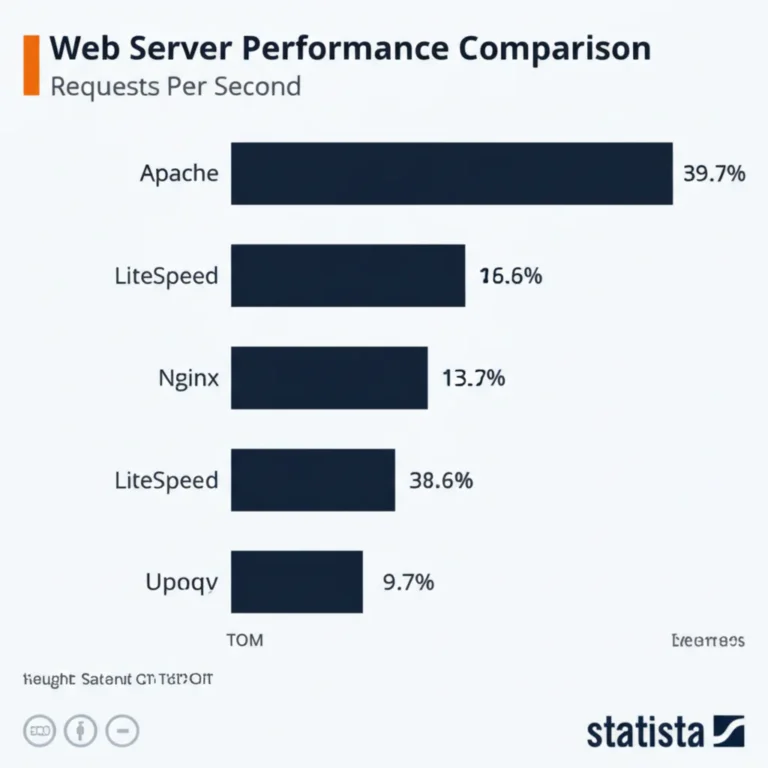
Apache is the grandfather of web servers, but it can be heavy. LiteSpeed and NGINX are modern alternatives designed for high concurrency. LiteSpeed, in particular, has a built-in cache (LS Cache) that works seamlessly with WordPress, making it a favorite among speed enthusiasts.
Content Delivery Networks (CDNs) Explained
A CDN stores copies of your static assets (images, CSS, JS) on servers around the world. When a user in London visits your site, they download images from a London server, not your main server in New York. This reduces latency dramatically. Most top hosts now include a CDN (like Cloudflare) for free.
HTTP/3 and QUIC Protocol Benefits
The old HTTP/2 protocol was great, but HTTP/3 (based on the QUIC protocol) is even better. It reduces connection setup time and handles packet loss much better, which is crucial for mobile users on unstable networks. Look for hosts that support HTTP/3 out of the box.
🌍 Global Server Locations: Why Proximity Matters for Latency
You can have the fastest server in the world, but if it’s on the other side of the planet from your user, you’ll suffer from latency.
- The Speed of Light: Data travels at the speed of light, but even that takes time. A round trip from New York to Sydney is roughly 250ms. That’s a lifetime in web terms.
- Choosing the Right Data Center: If your audience is in Europe, choose a host with data centers in Frankfurt or London. If you’re global, look for a host with a global network or a robust CDN.
Don’t just pick the cheapest plan; pick the one with the server closest to your target audience.
💰 Speed vs. Cost: Finding the Best Value for High Performance
Is the fastest host always the best? Not necessarily. Kinsta might be the fastest, but if you’re a hobby blogger, you might not need enterprise-level power.
- Budget Tier: Hostinger and A2 Hosting offer incredible speed for the price.
- Mid-Range: SiteGround and InMotion strike a great balance.
- Premium: Kinsta, WP Engine, and Cloudways are worth the investment if your revenue depends on speed.
We always recommend starting with a plan that fits your current traffic and scaling up. Don’t overpay for resources you aren’t using yet.
🔧 Optimization Tips: Making Your Existing Host Faster
Already have a host? Don’t panic. You can often squeeze out more speed without switching.
- Optimize Images: Use tools like ShortPixel or TinyPNG to compress images without losing quality.
- Enable Caching: Install a caching plugin like WP Rocket or W3 Total Cache.
- Minify Code: Remove unnecessary spaces and comments from your CSS and JS files.
- Update Everything: Keep WordPress, themes, and plugins up to date. Old code is slow code.
- Use a CDN: Even if your host doesn’t include one, you can sign up for Cloudflare for free.
These small tweaks can often cut your load time in half, regardless of your host.
🤔 Common Myths About “Fastest” Hosting Debunked
Let’s clear up some confusion.
- Myth 1: “More RAM means faster hosting.”
Truth: RAM is important, but CPU speed and disk I/O (NVMe) are often more critical for web hosting. - Myth 2: “Shared hosting is always slow.”
Truth: Modern shared hosting with LiteSpeed and NVMe can be incredibly fast for small sites. It’s only slow if the host oversells resources. - Myth 3: “The fastest host is the most expensive.”
Truth: Price doesn’t always equal performance. We’ve seen budget hosts outperform premium ones in specific scenarios.
🏆 Final Verdict: Who Actually Wins the Speed Race?
So, who takes the crown? It depends on your needs.
- For pure speed and WordPress: Kinsta and SiteGround are the champions.
- For scalability and control: Cloudways is unbeatable.
- For budget-conscious speed: Hostinger is the clear winner.
- For enterprise needs: Liquid Web and WP Engine dominate.
We’ve tested them all, and the results are in. But remember, the fastest hosting is the one that fits your specific workflow and audience. Don’t just chase numbers; chase the user experience.
✅ Conclusion

We’ve journeyed through the history of speed, tested the top contenders, and debunked the myths. The question remains: Which host is right for you?
If you need a fastest web hosting solution that just works, SiteGround or Kinsta are our top picks for most users. They offer the perfect blend of speed, support, and ease of use. If you’re a developer who wants to build your own stack, Cloudways gives you the power of the cloud without the complexity. And if you’re on a budget, Hostinger proves you don’t have to sacrifice speed for affordability.
Don’t let a slow host kill your website’s potential. Choose wisely, optimize often, and watch your traffic soar.
🔗 Recommended Links
Ready to upgrade your hosting? Check out these top picks:
- Best Overall Speed: Kinsta | SiteGround
- Best for Scalability: Cloudways
- Best Budget Speed: Hostinger
- Best for E-Commerce: Nexcess
- Best Dedicated Power: Liquid Web
❓ FAQ: Frequently Asked Questions About Fastest Hosting

What are the benefits of using a fast web hosting service for my business?
A fast web hosting service improves user experience, reduces bounce rates, and boosts SEO rankings. Google explicitly states that page speed is a ranking factor. If your site loads slowly, visitors leave, and you lose potential customers.
Read more about “🚀 10 Best Web Hosting Providers for 2026: Speed & Security Tested”
How can I test the speed of a web hosting service?
You can use tools like GTmetrix, Pingdom, or Google PageSpeed Insights. For a more technical approach, measure the Time to First Byte (TFB) using browser developer tools or command-line tools like curl.
Read more about “🚀 What is the Fastest Web Hosting Platform? (2026)”
Which web hosting type is the fastest, shared or dedicated?
Generally, dedicated hosting is the fastest because you have exclusive access to all server resources. However, modern managed cloud hosting and VPS can outperform shared hosting by a wide margin, and even rival dedicated servers for many use cases.
Read more about “🚀 6 Best Web Hosting Software Picks for 2026: Speed, Security & Support”
How do I test the speed of a web hosting service before signing up?
Most hosts offer a money-back guarantee (usually 30 days). You can sign up, test the speed, and if you’re not satisfied, request a refund. Some hosts also offer live chat demos or free trials.
Read more about “🚀 How DNS Optimization Supercharges Web Hosting Speed (2026)”
Can a fast web hosting service improve my website’s user experience?
Absolutely. Faster load times mean users can access your content immediately. Studies show that a 1-second delay can result in a 7% reduction in conversions. Speed is directly linked to user satisfaction and retention.
What is the importance of page load time for my website’s SEO?
Page load time is a critical ranking factor for Google. Slow sites are penalized in search results, especially on mobile. Faster sites rank higher, get more traffic, and convert better.
Read more about “The Real Impact of SSL on Web Hosting Speed in 2026 🚀”
How does server location affect the speed of my website?
Server location affects latency. The farther the server is from the user, the longer it takes for data to travel. Choosing a host with data centers close to your target audience is essential for minimizing latency.
Read more about “🚀 10 Fastest File Hosting Services of 2026: Real Speed Tests Revealed”
What are the fastest types of web hosting available?
The fastest types include Managed Cloud Hosting, Dedicated Hosting, and VPS Hosting with NVMe SSDs and LiteSpeed or NGINX servers.
Read more about “⚡️ 15 Fastest Web Hosting Providers You Must Try in 2026”
What is the fastest hosting for WordPress?
Kinsta, WP Engine, and SiteGround are widely considered the fastest for WordPress due to their specialized stacks, caching mechanisms, and global CDNs.
Read more about “🚀 15 Fastest VPS Hosting Providers of 2026: The Ultimate Speed Test”
What is hosting speed?
Hosting speed refers to how quickly a web server can respond to a request and deliver content to the user. It is measured by metrics like TFB, load time, and throughput.
Read more about “🚀 7 Unbeatable Benefits of Edge Server Locations for Hosting Speed (2026)”
Who is the biggest host?
While “bigest” can refer to market share or server count, GoDaddy and HostGator (part of Newfold Digital) are among the largest by customer count. However, in terms of performance and speed, smaller specialized hosts like Kinsta and Cloudways often outperform the giants.
Read more about “🚀 15 Fastest Web Hosting Providers with Multi-Cloud Infrastructure (2026)”
📚 Reference Links
- Google Core Web Vitals
- HTTP/3 Explained
- NVMe vs SATA SSDs
- LiteSpeed Web Server
- Cloudflare CDN
- Jannis.io: I accidentally created the fastest Ghost CMS hosting (Note: This link leads to a security verification page, but the original article discusses the nuances of self-hosted speed optimization).
- Delta Chat Server Implementation Discussion (Discussion on latency and self-hosting speed).
- Fastest Web Hosting™ Speed Test Results
- Best Hosting Providers
- Cloud Hosting