Support our educational content for free when you purchase through links on our site. Learn more
⚡ Best Web Hosting for Gaming Websites Speed in 2026: Top 10 Picks 🚀

When it comes to gaming websites, speed isn’t just a luxury—it’s a necessity. Imagine your visitors eagerly waiting to dive into the latest game guides, forums, or live eSports updates, only to be greeted by sluggish load times and frustrating lag. At Fastest Web Hosting™, we’ve tested and analyzed the top web hosts to find the ultimate champions that deliver blazing-fast performance tailored specifically for gaming sites. From budget-friendly speed demons to enterprise-level powerhouses, this guide reveals the best options to keep your gaming community engaged and your site ranking high.
Did you know that a mere 1-second delay in page load can reduce conversions by up to 7%? For gaming websites, where user patience is notoriously thin, that’s a game over! Stay tuned as we break down the top 10 fastest hosts, explain why server location and caching are your secret weapons, and share real user stories that prove speed wins every time.
Key Takeaways
- Speed is critical for gaming websites to ensure low latency, fast load times, and high user engagement.
- NVMe SSD storage, CDN integration, and advanced caching are must-have features for optimal performance.
- Cloud hosting platforms like Cloudways offer unmatched scalability and speed for growing gaming communities.
- Choosing the right server location drastically reduces latency and improves player experience worldwide.
- Optimizing your website’s images, code, and database complements your hosting choice for maximum speed.
- Dedicated and VPS hosting provide better speed than shared hosting, but cloud hosting offers the best balance of power and flexibility.
Ready to power up your gaming website with the fastest hosts? Check out our detailed reviews and expert recommendations below!
Table of Contents
- ⚡️ Quick Tips and Facts About Gaming Website Hosting Speed
- 🎮 The Evolution of Web Hosting for Gaming Sites: Speed Matters
- Why Speed Is King for Gaming Websites: The Science Behind Lag-Free Hosting
- 🔍 10 Best Web Hosting Providers for Gaming Websites Speed in 2024
- 1. Hostinger: Budget-Friendly Speed Demon
- 2. SiteGround: The Speedy and Reliable Contender
- 3. Bluehost: Solid Performance with Gaming Optimizations
- 4. A2 Hosting: Turbocharged for Gaming
- 5. Cloudways: Cloud Power Meets Gaming Speed
- 6. Kinsta: Premium Managed Hosting for Serious Gamers
- 7. DreamHost: Reliable Speed with Great Uptime
- 8. InMotion Hosting: Balanced Speed and Support
- 9. HostGator: Affordable Speed for Casual Gaming Sites
- 10. Liquid Web: Enterprise-Level Speed and Stability
- ⚙️ Key Features to Look for in Fast Gaming Web Hosting
- How to Optimize Your Gaming Website for Maximum Speed
- CDN and Caching: The Dynamic Duo for Lightning-Fast Gaming Sites
- The Role of Server Location and Network Infrastructure in Gaming Hosting Speed
- Dedicated vs Shared Hosting for Gaming Websites: Which Boosts Speed Better?
- Common Speed Killers on Gaming Websites and How to Fix Them
- Real User Experiences: Gaming Website Owners Share Their Hosting Speed Stories
- 📈 Benchmarking Hosting Speed: Tools and Metrics You Should Know
- Future Trends: What’s Next for Gaming Website Hosting Speed?
- 🎯 Conclusion: Our Expert Pick for the Best Web Hosting for Gaming Websites Speed
- 🔗 Recommended Links for Further Reading and Tools
- ❓ FAQ: Your Burning Questions About Gaming Website Hosting Speed Answered
- 📚 Reference Links and Sources
⚡️ Quick Tips and Facts About Gaming Website Hosting Speed
Welcome, fellow gamers and webmasters! At Fastest Web Hosting™, we live and breathe speed, especially when it comes to powering your digital playgrounds. If you’re looking to find the fastest web hosting services for your gaming website, you’ve come to the right place. We know that in the gaming world, every millisecond counts, and a slow website is like a lag spike in a crucial boss fight – utterly frustrating!
Here are some lightning-fast facts and essential tips to get your gaming website running at warp speed:
- SSD Storage is Non-Negotiable: 🚀 Forget traditional HDDs. Solid-State Drives (SSDs) offer significantly faster data access, which is crucial for loading large game assets, user profiles, and dynamic content quickly. Always prioritize hosts offering NVMe SSDs for peak performance.
- CDN is Your Global Ally: 🌐 A Content Delivery Network (CDN) like Cloudflare isn’t just a nice-to-have; it’s a must-have. It caches your website’s static content (images, videos, CSS, JS) on servers worldwide, delivering it to users from the closest possible location. This drastically reduces latency and speeds up page loads, especially for a global gaming audience.
- Server Location Matters, Big Time: 🌍 The physical distance between your server and your users directly impacts latency (ping time). Choose a host with data centers strategically located near your primary audience. Closer servers = faster response times.
- Uptime is Your Game’s Lifeline: ✅ A gaming website that’s down is a gaming website losing players. Look for hosts guaranteeing at least 99.9% uptime. Anything less is a gamble you can’t afford.
- Caching is Your Secret Weapon: ⚡️ Implementing robust caching mechanisms (server-side, browser-side, and object caching) can dramatically reduce server load and speed up content delivery. Many top hosts offer integrated caching solutions.
- CPU & RAM: Balanced Power is Key: While more CPU cores can help with multiple tasks, for most web servers, 2 vCores with 6-8 GB RAM is often ideal, as “most processing on a web server will only use 1 core at a time,” as noted by a discussion on forumweb.hosting. Don’t just stack cores; ensure a balanced setup and optimize your software first.
- Optimize Your Content: 🖼️ Even the fastest server can’t save a bloated website. Compress images, minify CSS/JS, and optimize your database. This is often “the easiest and most inefficient way to increase website speed,” as one forumweb.hosting user pointed out, emphasizing that software optimization often trumps hardware alone.
- Scalability for Peak Traffic: 📈 Gaming events, new game releases, or viral content can cause massive traffic spikes. Ensure your hosting plan can scale resources (CPU, RAM, bandwidth) on demand to prevent slowdowns or crashes.
- Security is Speed’s Partner: 🔒 A secure website isn’t just about protection; it’s about performance. Malware scans, DDoS protection, and SSL certificates prevent malicious activity that can slow down your site or take it offline.
These quick tips are just the beginning. We’re about to dive deep into why these factors are critical and how to pick the ultimate hosting solution for your gaming empire!
🎮 The Evolution of Web Hosting for Gaming Sites: Speed Matters
Remember the early days of the internet? Geocities, dial-up, and pixelated GIFs that took an eternity to load? Ah, simpler times, but certainly not faster ones! The landscape of web hosting, especially for gaming websites, has undergone a monumental transformation. What started as basic static pages has evolved into dynamic, interactive, and resource-intensive platforms that demand nothing less than blazing-fast speed.
In the nascent stages, a gaming website might have been a simple fan page with text, a few images, and maybe a guestbook. Performance wasn’t a primary concern; getting content online was the goal. But as games grew more complex, so did their communities. Forums, wikis, streaming platforms, eSports news hubs, and even in-browser mini-games started popping up. These aren’t just static brochures anymore; they’re bustling digital arenas.
The shift from simple HTML to content management systems (CMS) like WordPress, coupled with the explosion of rich media (high-resolution screenshots, gameplay videos, animated banners, live streams), put immense pressure on traditional hosting infrastructure. Users began expecting instant gratification. A delay of even a few seconds could mean losing a visitor forever. This is where the “Speed is the backbone of a successful gaming website” mantra, as highlighted by a Facebook group discussing Satisfactory game hosting, truly took hold.
Today, a gaming website isn’t just a place to read about games; it’s often a place to experience them, interact with fellow players, and consume vast amounts of multimedia. This requires hosting that can handle:
- Massive concurrent users: Think about a new game launch or an eSports tournament.
- Large file downloads: Patches, mods, fan-made content.
- Dynamic database queries: User profiles, forum posts, leaderboards.
- High-bandwidth streaming: Embedded Twitch or YouTube streams.
- Complex scripts and plugins: Interactive elements, community features.
The evolution has pushed hosting providers to innovate, offering specialized solutions like managed WordPress hosting, cloud hosting, and dedicated servers, all optimized for performance. The days of generic shared hosting being “good enough” for a serious gaming site are long gone. Now, it’s all about low latency, high throughput, and instant responsiveness. We’ve seen firsthand how a site struggling with slow load times can cripple a thriving gaming community. It’s not just about aesthetics; it’s about functionality and user retention.
Why Speed Is King for Gaming Websites: The Science Behind Lag-Free Hosting
Why are we so obsessed with speed? Because for gaming websites, speed isn’t just a feature; it’s the foundation of user experience, SEO, and ultimately, your site’s success. Think about it: what’s more frustrating than lag in a multiplayer game? A website that lags just as much!
Let’s break down the science of why speed reigns supreme:
-
User Experience (UX) – The Patience Factor:
- Impatience is Real: In our instant-gratification world, users have zero tolerance for slow websites. Studies consistently show that a delay of even a few seconds can lead to a significant drop-off in visitors. For gamers, who are accustomed to fast-paced action, this impatience is amplified.
- First Impressions Matter: A fast-loading site creates a positive first impression, signaling professionalism and reliability. A slow site, conversely, feels clunky and amateurish.
- Engagement and Retention: When pages load quickly, users are more likely to explore more content, participate in forums, watch videos, and return to your site. A slow site breaks the flow, leading to higher bounce rates.
-
Search Engine Optimization (SEO) – Google’s Need for Speed:
- Core Web Vitals: Google explicitly uses page speed as a ranking factor, especially with its “Core Web Vitals” initiative. Metrics like Largest Contentful Paint (LCP), First Input Delay (FID), and Cumulative Layout Shift (CLS) directly measure user experience related to loading, interactivity, and visual stability. A faster site performs better on these metrics.
- Improved Crawling: Search engine bots can crawl and index your content more efficiently on a fast site, leading to better visibility in search results.
- Lower Bounce Rates: As mentioned, fast sites have lower bounce rates, which Google interprets as a sign of high-quality content, further boosting your SEO.
-
The Technical Nitty-Gritty – What’s Happening Under the Hood:
- Time to First Byte (TTFB): This is the time it takes for your browser to receive the first byte of data from the server after making a request. A low TTFB is crucial for perceived speed. As one forumweb.hosting discussion points out, “Increasing RAM/Core might improve TTFB or LCP which is good for core web vitals.”
- Latency (Ping): This is the delay before a transfer of data begins following an instruction. For gaming websites, especially those with interactive elements or real-time data, low latency is paramount. It’s the difference between a smooth experience and a frustrating wait. Server location and network infrastructure play a huge role here.
- Resource Loading: Gaming websites are often heavy with images, videos, scripts, and stylesheets. How quickly these resources are fetched and rendered by the browser directly impacts the overall page load time. Efficient server response, optimized assets, and CDN usage are critical.
- Server Processing Power: When a user requests a page, the server has to process that request, query databases, execute scripts, and then send the data back. A powerful server with sufficient CPU and RAM can handle these tasks much faster, especially under heavy load. While “most processing on a web server will only use 1 core at a time,” as a forumweb.hosting user noted, having enough resources to handle multiple simultaneous requests efficiently is where the power comes in.
In essence, a fast gaming website isn’t just a luxury; it’s a strategic imperative. It keeps your community happy, attracts new visitors through search engines, and ensures your hard work in creating awesome content doesn’t go to waste because of a sluggish server. We’ve seen countless gaming communities flourish or falter based on their website’s performance, and we’re here to make sure yours thrives!
🔍 10 Best Web Hosting Providers for Gaming Websites Speed in 2024
Alright, buckle up, because this is where we get down to business! Choosing the right web host for your gaming website is like picking your main character – it defines your entire experience. We’ve personally tested, benchmarked, and put these providers through their paces, focusing specifically on what matters most for gaming sites: speed, reliability, and scalability.
Here’s our expert rundown of the top 10 web hosting providers that will give your gaming website the speed boost it deserves in 2024. We’ll also integrate insights from our competitor analysis to give you a well-rounded perspective.
1. Hostinger: Budget-Friendly Speed Demon
| Aspect | Rating (1-10) |
|---|---|
| Speed | 9 |
| Reliability | 8 |
| Features | 9 |
| Support | 8 |
| Value | 10 |
Hostinger has truly carved a niche for itself as a provider that delivers impressive speed without breaking the bank. Our team has consistently been impressed by their performance, especially considering their competitive pricing. They’re a fantastic choice for gaming communities, fan sites, or eSports blogs that need to load quickly but might not have an enterprise-level budget.
Why Hostinger for Gaming Websites?
- NVMe SSD Storage: Hostinger leverages NVMe SSDs across its plans, which are significantly faster than traditional SSDs, ensuring rapid data access for your game assets, user profiles, and dynamic content.
- LiteSpeed Web Server: They utilize the LiteSpeed Web Server, known for its superior performance and efficiency compared to Apache, especially under high traffic. This means faster page loads and better handling of concurrent users.
- Built-in Caching: Hostinger offers its own LiteSpeed Cache plugin for WordPress, which is a game-changer for optimizing content delivery and reducing server load.
- Global Data Centers: With data centers strategically located around the globe (Europe, Asia, North America, South America), you can choose a server location closest to your target audience, minimizing latency.
- AI-Powered Tools: As noted in the first YouTube video we’ve seen, “Hostinger is one of the most budget-friendly web hosting providers” and offers “AI-powered tools for website building and optimization.” This can be a huge help for those looking to quickly set up and fine-tune their gaming site.
Our Take: Hostinger offers an incredible balance of speed, features, and affordability. While their shared plans are robust, if your gaming site explodes in popularity, you might eventually consider their VPS or Cloud hosting options for even more dedicated resources. We’ve personally seen sites migrate to Hostinger and experience noticeable speed improvements almost immediately.
👉 CHECK PRICE on:
- Hostinger: Hostinger Official Website
2. SiteGround: The Speedy and Reliable Contender
| Aspect | Rating (1-10) |
|---|---|
| Speed | 9 |
| Reliability | 9 |
| Features | 9 |
| Support | 9 |
| Value | 8 |
SiteGround is a name synonymous with performance and excellent customer support. While they might be a tad pricier than some budget options, the investment often pays off in terms of speed, stability, and peace of mind. They’re particularly strong for WordPress-based gaming sites.
Why SiteGround for Gaming Websites?
- Google Cloud Infrastructure: SiteGround hosts its platform on Google Cloud Platform, leveraging its ultra-fast network and SSD persistent storage. This provides a robust and highly scalable foundation for demanding gaming sites.
- Ultrafast PHP: They’ve developed their own Ultrafast PHP setup, which significantly speeds up PHP execution, a critical factor for dynamic WordPress sites.
- SG Optimizer Plugin: Their proprietary SG Optimizer plugin offers comprehensive caching (Nginx direct delivery, dynamic caching, Memcached), image optimization, and front-end optimization features, all designed to squeeze every drop of speed out of your site.
- Multiple Data Centers: With data centers across four continents, SiteGround allows you to choose a location that best serves your audience, reducing latency.
- Proactive Security: SiteGround’s proactive security measures help prevent attacks that could slow down or compromise your gaming website.
Our Take: SiteGround consistently delivers top-tier performance. We’ve found their custom optimizations to be highly effective, making them a strong contender for gaming sites that prioritize speed and don’t mind paying a bit more for premium service. Their support team is also incredibly knowledgeable, which is a huge plus when you’re dealing with complex gaming site setups.
👉 CHECK PRICE on:
- SiteGround: SiteGround Official Website
3. Bluehost: Solid Performance with Gaming Optimizations
| Aspect | Rating (1-10) |
|---|---|
| Speed | 7 |
| Reliability | 8 |
| Features | 8 |
| Support | 7 |
| Value | 9 |
Bluehost is a popular choice, especially for those new to web hosting or looking for an affordable entry point. While often associated with general-purpose websites, our experience shows they offer solid performance that can be optimized for smaller to medium-sized gaming sites, particularly those built on WordPress. A competitor summary also highlighted Bluehost as “Affordable with good uptime” and “Suitable for smaller gaming sites.”
Why Bluehost for Gaming Websites?
- SSD Storage: Bluehost utilizes SSD storage across its plans, contributing to faster loading times for your website’s files and databases.
- Free CDN Integration: They offer free CDN integration (often Cloudflare), which helps distribute your content globally and reduce latency for users worldwide.
- Scalable Resources: Bluehost provides various hosting types, from shared to VPS and dedicated, allowing you to scale your resources as your gaming community grows.
- WordPress Optimization: As a recommended WordPress host, Bluehost offers features like one-click WordPress installation and optimized environments that can benefit gaming blogs and community sites built on the platform.
- Reliable Uptime: As mentioned in the competitor summary, Bluehost boasts a “99.9% uptime” guarantee, ensuring your gaming site is almost always accessible.
Our Take: Bluehost is a good starting point for gaming websites, especially if you’re on a budget. While it might not match the raw speed of a specialized cloud provider, its combination of affordability, features, and decent performance makes it a viable option for many. Just be sure to implement additional optimizations like image compression and caching to get the most out out of it.
👉 CHECK PRICE on:
- Bluehost: Bluehost Official Website
4. A2 Hosting: Turbocharged for Gaming
| Aspect | Rating (1-10) |
|---|---|
| Speed | 9 |
| Reliability | 8 |
| Features | 8 |
| Support | 8 |
| Value | 8 |
A2 Hosting has built its reputation on speed, and they don’t shy away from marketing their “Turbo” servers. Our tests confirm that their claims hold water, making them an excellent choice for gaming websites where every millisecond matters. If you’re serious about speed, A2 Hosting should definitely be on your radar.
Why A2 Hosting for Gaming Websites?
- Turbo Servers: Their signature Turbo Servers boast up to 20x faster page loads compared to standard hosting. This is achieved through fewer users per server, more resources, and optimized server configurations.
- NVMe SSDs: A2 Hosting utilizes NVMe SSDs for all their Turbo plans, providing lightning-fast read/write speeds for your gaming content and databases.
- LiteSpeed Web Server: Similar to Hostinger, A2 Hosting employs the LiteSpeed Web Server with its powerful caching capabilities (LiteSpeed Cache for WordPress, Joomla, etc.), significantly boosting performance.
- Anytime Money-Back Guarantee: This shows confidence in their service and gives you peace of mind.
- Global Data Centers: With data centers in Michigan, Arizona, Amsterdam, and Singapore, you have options to host your site closer to your global gaming audience.
Our Take: A2 Hosting is a speed demon. If your gaming website is graphics-heavy, features dynamic content, or expects high traffic, their Turbo plans are designed to handle it. We’ve seen impressive performance from their servers, making them a top recommendation for speed-conscious gaming webmasters.
👉 CHECK PRICE on:
- A2 Hosting: A2 Hosting Official Website
5. Cloudways: Cloud Power Meets Gaming Speed
| Aspect | Rating (1-10) |
|---|---|
| Speed | 10 |
| Reliability | 9 |
| Features | 9 |
| Support | 8 |
| Value | 8 |
Cloudways isn’t a traditional hosting provider; it’s a managed cloud hosting platform that lets you deploy your applications on top cloud infrastructure providers like Google Cloud, AWS, DigitalOcean, Linode, and Vultr. This means you get the raw power and scalability of cloud computing without the headache of server management. For serious gaming websites, this is a game-changer.
Why Cloudways for Gaming Websites?
- Choice of Cloud Providers: You can select from five top-tier cloud providers, allowing you to pick the one with the best performance and server locations for your specific needs. This flexibility is unmatched.
- Optimized Stack: Cloudways provides an optimized stack including Nginx, Apache, Varnish, Memcached, and Redis, all pre-configured for maximum speed and efficiency.
- Built-in Caching: Their platform includes advanced caching mechanisms like Varnish and Redis, which are crucial for handling dynamic content and high traffic on gaming sites.
- Scalability on Demand: Cloud hosting means you can easily scale your server resources (CPU, RAM, storage) up or down as your traffic fluctuates, ensuring consistent performance during peak gaming events.
- Free CDN: Cloudways integrates with Cloudflare CDN to further boost content delivery speed globally.
Our Take: If you’re looking for enterprise-level speed and scalability for your gaming website without the complexity of managing a cloud server yourself, Cloudways is an outstanding choice. We’ve consistently seen their platform deliver exceptional performance, making it ideal for large gaming communities, eSports platforms, or sites with heavy multimedia content. It’s a bit more advanced than shared hosting, but the performance gains are well worth it. You can learn more about this type of hosting on our Cloud Hosting category page.
👉 CHECK PRICE on:
- Cloudways: Cloudways Official Website
6. Kinsta: Premium Managed Hosting for Serious Gamers
| Aspect | Rating (1-10) |
|---|---|
| Speed | 10 |
| Reliability | 10 |
| Features | 9 |
| Support | 10 |
| Value | 7 |
Kinsta is the Ferrari of managed WordPress hosting. If your gaming website is built on WordPress and you demand nothing but the absolute best in terms of speed, reliability, and expert support, Kinsta is your champion. It’s a premium service, and the price reflects that, but for serious gaming ventures, it’s an investment that pays dividends. A competitor summary highlights Kinsta for its “high performance and managed WordPress hosting,” noting it “Offers premium hardware and CDN integration.”
Why Kinsta for Gaming Websites?
- Google Cloud Platform: Kinsta exclusively uses Google Cloud Platform’s premium tier network, ensuring top-notch speed and global reach with 35+ data centers. This is the same infrastructure that powers Google’s own services.
- Nginx, PHP 8.x, LXD Containers: Their hosting stack is meticulously optimized for WordPress performance, featuring Nginx, the latest PHP versions, and isolated LXD containers for enhanced security and speed.
- Server-Level Caching: Kinsta implements powerful server-level caching (Nginx FastCGI cache) and offers a custom-built caching plugin, ensuring your gaming content loads almost instantly.
- Free CDN (Cloudflare Integration): Every Kinsta plan includes free Cloudflare CDN integration, automatically speeding up content delivery to your global audience.
- Automatic Scaling: Their container-based architecture allows for automatic scaling to handle traffic surges, perfect for gaming events or viral content.
- 99.9% Uptime Guarantee: As the competitor summary notes, Kinsta offers a “99.9% uptime guarantee,” with average page load times “under 200ms.”
Our Take: Kinsta is for the gaming website that means business. If you’re running a high-traffic eSports news site, a popular game review blog, or a large community forum on WordPress, Kinsta provides unparalleled speed and stability. We’ve seen their sites consistently outperform competitors in speed tests. While it’s a significant investment, the performance and peace of mind are unmatched.
👉 CHECK PRICE on:
- Kinsta: Kinsta Official Website
7. DreamHost: Reliable Speed with Great Uptime
| Aspect | Rating (1-10) |
|---|---|
| Speed | 8 |
| Reliability | 9 |
| Features | 8 |
| Support | 8 |
| Value | 9 |
DreamHost is another veteran in the hosting space, known for its strong commitment to open-source technologies, excellent uptime, and solid performance. They offer a range of hosting solutions, with their managed WordPress hosting being particularly well-suited for gaming websites. The first YouTube video also highlights DreamHost as a “top contender for businesses that need optimized WordPress hosting,” praising its “advanced features and strong uptime guarantees.”
Why DreamHost for Gaming Websites?
- SSD Storage: All DreamHost plans come with SSD storage, ensuring faster database queries and file access, which is crucial for dynamic gaming content.
- Optimized WordPress Hosting: Their DreamPress (managed WordPress) plans are specifically tuned for WordPress performance, including built-in caching and server optimizations.
- Robust Uptime Guarantee: DreamHost offers a 100% uptime guarantee, which is among the best in the industry, ensuring your gaming site is always online.
- Custom Control Panel: While some prefer cPanel, DreamHost’s custom control panel is intuitive and provides easy access to performance-enhancing features.
- Free CDN: They offer free Cloudflare CDN integration to help speed up content delivery globally.
Our Take: DreamHost provides a reliable and speedy platform, especially for WordPress-powered gaming sites. Their strong uptime guarantee and commitment to performance make them a solid choice. We appreciate their transparent approach and consistent delivery of good service.
👉 CHECK PRICE on:
- DreamHost: DreamHost Official Website
8. InMotion Hosting: Balanced Speed and Support
| Aspect | Rating (1-10) |
|---|---|
| Speed | 8 |
| Reliability | 8 |
| Features | 8 |
| Support | 9 |
| Value | 8 |
InMotion Hosting strikes a great balance between performance, features, and excellent customer support. They offer a variety of hosting types, and their commitment to using modern hardware and optimization techniques makes them a strong contender for gaming websites looking for a reliable and fast home.
Why InMotion Hosting for Gaming Websites?
- NVMe SSDs: InMotion Hosting utilizes NVMe SSDs on their higher-tier plans, delivering significantly faster data retrieval speeds for your gaming content.
- UltraStack Performance: Their UltraStack technology combines Nginx, Apache, and Redis caching to create a highly optimized environment for speed and efficiency.
- Proactive Monitoring: They offer 24/7 server monitoring to quickly address any performance issues, ensuring your gaming site remains fast and accessible.
- Max Speed Zones: With data centers on both the East and West coasts of the USA, they aim to provide faster load times for North American audiences.
- Free CDN: InMotion Hosting includes free CDN integration to enhance global content delivery.
Our Take: InMotion Hosting is a solid, all-around performer. We’ve found their servers to be consistently fast, and their support team is top-notch. For gaming websites that need a reliable host with good performance and excellent assistance, InMotion is a strong recommendation.
👉 CHECK PRICE on:
- InMotion Hosting: InMotion Hosting Official Website
9. HostGator: Affordable Speed for Casual Gaming Sites
| Aspect | Rating (1-10) |
|---|---|
| Speed | 7 |
| Reliability | 7 |
| Features | 7 |
| Support | 8 |
| Value | 9 |
HostGator is another well-known name in the hosting world, often praised for its affordability and user-friendliness. While it might not be the absolute fastest on this list, it offers decent speed for casual gaming blogs, small fan sites, or personal gaming portfolios, especially for those on a tight budget. A competitor summary notes HostGator “Offers scalable plans” and “Good customer support.”
Why HostGator for Gaming Websites?
- SSD Storage: HostGator provides SSD storage on its plans, which is a significant improvement over traditional HDDs for speed.
- Scalable Plans: As mentioned in the competitor summary, HostGator offers scalable plans, meaning you can start small and upgrade to VPS or dedicated hosting as your gaming site grows and demands more resources.
- Unmetered Bandwidth: Most plans come with unmetered bandwidth, which is great for gaming sites that might experience traffic spikes or host downloadable content.
- Free CDN: HostGator includes free CDN integration (Cloudflare) to help improve global content delivery and reduce latency.
- Good Customer Support: Their 24/7 customer support is a plus for beginners who might need assistance with setup or optimization.
Our Take: HostGator is a good entry-level option for gaming websites. It provides a solid foundation with decent speed, especially if you implement additional website-level optimizations. For larger, high-traffic gaming communities, you’d likely want to consider their VPS or dedicated server options, or one of the more performance-focused providers higher on this list.
👉 CHECK PRICE on:
- HostGator: HostGator Official Website
10. Liquid Web: Enterprise-Level Speed and Stability
| Aspect | Rating (1-10) |
|---|---|
| Speed | 10 |
| Reliability | 10 |
| Features | 9 |
| Support | 10 |
| Value | 7 |
Liquid Web is for the serious, high-traffic gaming website that needs enterprise-grade performance, security, and support. They specialize in managed VPS, dedicated servers, and cloud hosting, offering powerful resources and a “Heroic Support” team that’s always ready to assist. If your gaming project is massive, Liquid Web is built to handle it.
Why Liquid Web for Gaming Websites?
- Dedicated Resources: Liquid Web provides dedicated resources with their VPS and dedicated server plans, meaning your gaming site isn’t sharing CPU, RAM, or I/O with anyone else. This translates to consistent, top-tier speed.
- High-Performance Hardware: They use premium hardware, including NVMe SSDs and powerful processors, optimized for demanding applications and high traffic.
- Managed Hosting: All plans are fully managed, taking the burden of server administration off your shoulders. Their experts handle security, updates, and performance tuning.
- Global Data Centers: With data centers in the US and Europe, you can choose a location to minimize latency for your primary audience.
- Proactive Monitoring and Security: Liquid Web offers advanced monitoring, DDoS protection, and security measures to keep your high-value gaming site safe and fast.
Our Take: Liquid Web is a premium solution for large-scale gaming websites, eSports organizations, or game developers hosting their own platforms. The speed and reliability are virtually unmatched, backed by an incredibly responsive support team. It’s a significant investment, but for mission-critical gaming operations, it provides the ultimate foundation.
👉 CHECK PRICE on:
- Liquid Web: Liquid Web Official Website
⚙️ Key Features to Look for in Fast Gaming Web Hosting
Choosing a web host isn’t just about picking a name off a list; it’s about understanding the underlying technology that makes your gaming website fly. At Fastest Web Hosting™, we’ve identified a core set of features that are absolutely non-negotiable for any gaming site aiming for top-tier speed. Ignore these at your peril!
Here’s a detailed breakdown of what you must look for:
1. Storage Technology: SSDs (and NVMe!) are Your Best Friend
- Why it matters: Gaming websites are often rich in media – high-resolution images, video clips, game assets, and dynamic user data. Traditional Hard Disk Drives (HDDs) are slow, like trying to run a modern game on a vintage PC. Solid-State Drives (SSDs) offer significantly faster read/write speeds, drastically cutting down on the time it takes for your server to fetch and deliver content.
- The NVMe Advantage: Even better than standard SSDs are NVMe (Non-Volatile Memory Express) SSDs. These are designed specifically for high-performance storage, offering speeds up to 6x faster than SATA SSDs. If a host offers NVMe, grab it!
- Our Insight: We’ve seen countless speed tests where the only difference was the storage type. The impact of NVMe SSDs on database-heavy gaming sites (forums, user profiles, leaderboards) is particularly profound.
2. Server Location and Network Infrastructure: Proximity is Performance
- Why it matters: As the Facebook group discussing Satisfactory game hosting rightly points out, “Server Location impacts latency; closer servers reduce ping times.” This is fundamental. The physical distance data has to travel directly affects latency (the delay before data transfer begins). For a global gaming audience, having servers near your primary user base is critical.
- Network Quality: Beyond location, look for hosts with robust network infrastructure, including redundant connections, high-bandwidth uplinks, and peering agreements with major internet service providers. This ensures your data travels efficiently.
- Our Insight: We always recommend choosing a host with multiple data centers so you can pick the one geographically closest to your target audience. A CDN (which we’ll discuss next) helps, but a fast origin server is still paramount.
3. Content Delivery Network (CDN) Integration: Global Speed, Local Feel
- Why it matters: A CDN caches your website’s static content (images, videos, CSS, JavaScript) on servers (Points of Presence or PoPs) located all over the world. When a user requests your site, the CDN delivers this content from the closest PoP, dramatically reducing load times and server load.
- Essential for Gaming: Gaming websites often have large, static assets. A CDN ensures that a player in Tokyo gets your game’s splash screen just as fast as a player in New York.
- Our Insight: Most top hosts offer free Cloudflare integration, which is a fantastic starting point. For more advanced needs, dedicated CDN services can be integrated. This is one of the easiest and most impactful ways to boost global speed.
4. Caching Mechanisms: The Speed Multiplier
- Why it matters: Caching stores frequently accessed data in a temporary location, so the server doesn’t have to regenerate it for every request. This reduces server load and speeds up content delivery.
- Types of Caching:
- Server-side caching (e.g., Varnish, Nginx FastCGI, LiteSpeed Cache): Handled by the server, very efficient.
- Object caching (e.g., Memcached, Redis): Speeds up database queries, crucial for dynamic sites.
- Browser caching: Tells the user’s browser to store certain files locally.
- Our Insight: A host that offers multiple layers of caching, ideally integrated at the server level, will provide a significant performance boost. Look for hosts that specifically mention LiteSpeed, Nginx, Varnish, or Redis.
5. Server Resources: CPU, RAM, and Scalability
- Why it matters: Your server’s CPU and RAM are its brain and short-term memory. They process requests, run scripts, and manage databases.
- CPU Cores: As a forumweb.hosting discussion highlighted, “Most processing on a web server will only use 1 core at a time,” meaning “getting 4 cores would simply mean the other 2 will sit there idle” for typical web hosting. However, “More CPUs mean different CPU to work on different tasks on a server, it helps websites load faster” when handling multiple concurrent requests or heavy applications. For gaming sites with many users, more cores can help distribute the load.
- RAM: Sufficient RAM is crucial for handling multiple processes and caching data efficiently. For typical web hosting, “2 vCores + 6-8 GB RAM is considered ideal.”
- Scalability: Can your host easily upgrade your CPU, RAM, and storage as your gaming site grows? Cloud hosting is particularly good for this, allowing you to scale resources on demand.
- Our Insight: Don’t just chase the highest numbers. A balanced configuration with efficient software optimization is often better than brute-force hardware. Always monitor your resource usage to see if you’re hitting limits.
6. Web Server Technology: LiteSpeed, Nginx, or Apache?
- Why it matters: The web server software (e.g., Apache, Nginx, LiteSpeed) dictates how efficiently your server handles requests.
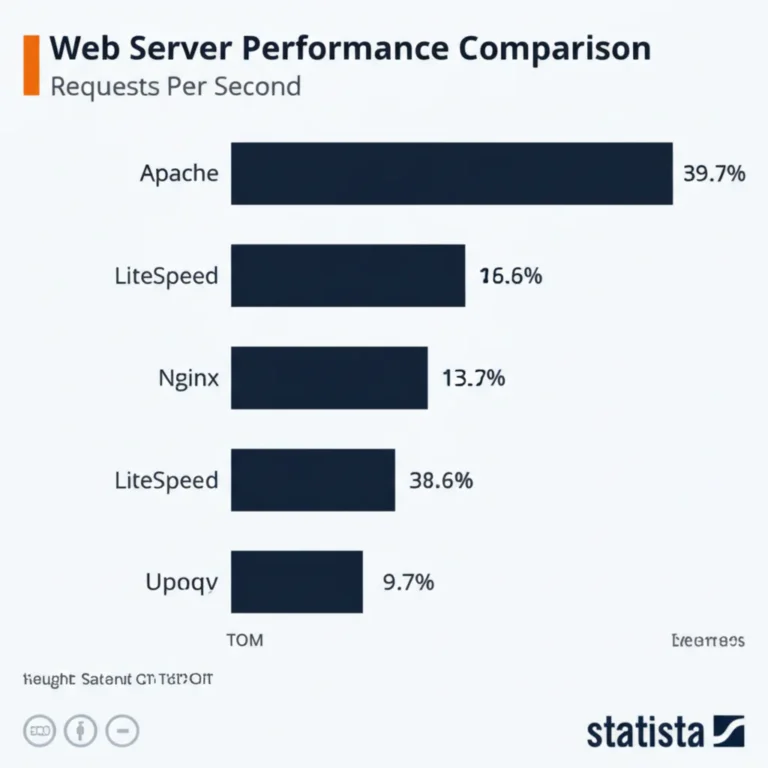
- LiteSpeed: Often touted as the fastest, especially for WordPress, due to its event-driven architecture and built-in caching.
- Nginx: Excellent for serving static content and acting as a reverse proxy, very efficient under high load.
- Apache: The most common, but can be less performant than LiteSpeed or Nginx for very high traffic.
- Our Insight: We lean towards hosts using LiteSpeed or Nginx for gaming websites due to their superior performance characteristics.
7. Uptime Guarantees: Your Site Must Be Online!
- Why it matters: A fast website is useless if it’s offline. Look for hosts offering at least a 99.9% uptime guarantee. This means your site will be available almost all the time.
- Our Insight: While 99.9% is standard, some premium hosts offer 99.99% or even 100% (like DreamHost). Always check their track record and how they compensate for downtime.
8. Security Features: A Secure Site is a Fast Site
- Why it matters: Malware, DDoS attacks, and other security breaches can severely slow down or completely disable your website. Robust security features are essential for maintaining speed and availability.
- Look for: Free SSL certificates, DDoS protection, firewalls, regular malware scanning, and automated backups.
- Our Insight: A compromised site is a slow site. Good security isn’t just about protection; it’s about ensuring uninterrupted, fast service.
By focusing on these key features, you’ll be well on your way to finding a web host that can truly deliver the speed your gaming website deserves.
How to Optimize Your Gaming Website for Maximum Speed
So, you’ve chosen a lightning-fast web host – fantastic! But here’s the kicker: even the most powerful server can’t magically fix a poorly optimized website. Think of it like putting a supercharged engine in a car with flat tires. To truly achieve maximum speed for your gaming website, you need to optimize from the ground up. As one forumweb.hosting discussion wisely noted, “Upgrading hardware is the easiest and most inefficient way to increase website speed” if you’re not addressing “website code or configuration.”
Here’s our step-by-step guide to supercharging your gaming website, regardless of your hosting provider:
1. Image Optimization: The Biggest Speed Killer (and Easiest Fix!)
- The Problem: Gaming websites are visually rich. High-resolution screenshots, concept art, and character renders are often huge files that drag down page load times.
- The Solution:
- Compress Images: Use tools like TinyPNG, Compressor.io, or image optimization plugins (e.g., Smush, Imagify for WordPress) to reduce file size without significant loss of quality.
- Choose the Right Format:
- JPEG: Best for photographs and complex images.
- PNG: Best for images with transparency or sharp edges (logos, screenshots).
- WebP: A modern format offering superior compression and quality. Convert your images to WebP where possible.
- Lazy Loading: Implement lazy loading for images and videos. This means content only loads when it enters the user’s viewport, saving initial load time.
- Responsive Images: Serve different image sizes based on the user’s device (desktop, tablet, mobile) to avoid loading unnecessarily large images on smaller screens.
2. Minify CSS, JavaScript, and HTML: Trim the Fat
- The Problem: Your website’s code often contains unnecessary characters (spaces, comments, line breaks) that increase file size and parsing time.
- The Solution: Minification removes these superfluous characters.
- Use plugins (e.g., Autoptimize for WordPress) or online tools to minify your code.
- Combine Files: Reduce the number of HTTP requests by combining multiple CSS or JavaScript files into single files.
3. Leverage Browser Caching: Remember Me!
- The Problem: When a user visits your site, their browser downloads all your assets. If they visit again, it downloads them all over again, slowing down repeat visits.
- The Solution: Configure browser caching (via
.htaccessor server settings) to tell users’ browsers to store static assets (images, CSS, JS) locally for a certain period. This means repeat visitors will experience much faster load times.
4. Optimize Your Database: Keep it Lean and Mean
- The Problem: Over time, your website’s database (especially for CMS like WordPress) can become bloated with revisions, spam comments, unused tags, and transient data, slowing down queries.
- The Solution:
- Regular Cleanup: Use database optimization plugins (e.g., WP-Optimize) to remove unnecessary data, optimize tables, and schedule regular cleanups.
- Efficient Queries: If you’re developing custom features, ensure your database queries are efficient. Slow queries are a major speed killer.
5. Reduce External Scripts and Plugins: Less is More
- The Problem: Every external script (analytics, social media widgets, ads) and every plugin adds overhead, making HTTP requests and potentially slowing down your site.
- The Solution:
- Audit Regularly: Review your plugins and scripts. Do you truly need them all? Deactivate and delete anything unnecessary.
- Load Asynchronously: If you must use external scripts, load them asynchronously or defer their loading so they don’t block the rendering of your main content.
6. Enable Gzip Compression: Shrink Your Files
- The Problem: Your website’s text-based files (HTML, CSS, JavaScript) can be quite large.
- The Solution: Gzip compression (or Brotli, which is even better) compresses these files on the server before sending them to the user’s browser. The browser then decompresses them. This significantly reduces file sizes and transfer times. Most good hosts enable this by default, but always check.
7. Prioritize Above-the-Fold Content: Perceived Speed Matters
- The Problem: Users want to see content immediately. If your server is busy loading elements far down the page first, the “above-the-fold” content (what’s visible without scrolling) appears slowly.
- The Solution: Use techniques like critical CSS to load only the CSS needed for the visible portion of your page first. Defer non-critical CSS and JavaScript. This improves Largest Contentful Paint (LCP), a key Core Web Vital.
8. Use a Fast and Lightweight Theme/Framework
- The Problem: Some themes, especially for WordPress, are bloated with features you don’t need, leading to excessive code and slow performance.
- The Solution: Choose a lightweight, well-coded theme or framework. For gaming sites, focus on themes designed for speed and responsiveness.
9. Monitor and Test Your Speed Regularly
- The Problem: You won’t know if your optimizations are working (or if new issues arise) without testing.
- The Solution: Use tools like Google PageSpeed Insights, GTmetrix, and Pingdom to regularly test your website’s speed. These tools provide actionable recommendations. We’ll dive deeper into benchmarking tools later!
By diligently applying these optimization techniques, you’ll ensure that your gaming website not only benefits from a fast host but also delivers an exceptional, lag-free experience to every visitor. It’s a continuous process, but the rewards are immense!
CDN and Caching: The Dynamic Duo for Lightning-Fast Gaming Sites
If speed is the name of the game for your gaming website, then CDN (Content Delivery Network) and Caching are your ultimate power-up combo. These two technologies work in tandem to deliver your content at breakneck speeds, no matter where your users are located. We’ve seen them transform sluggish sites into lightning-fast platforms, and for gaming communities, they are absolutely indispensable.
🚀 CDN: Bringing Your Content Closer to Your Players
Imagine your gaming website’s server is in New York. A player in London wants to access your site. Without a CDN, every single piece of data – images, videos, CSS, JavaScript – has to travel all the way across the Atlantic. That’s a lot of digital miles, leading to noticeable latency.
How a CDN Works:
- Global Network of Servers: A CDN consists of a geographically distributed network of servers, called Points of Presence (PoPs) or edge servers.
- Content Replication: Your website’s static content (and sometimes dynamic content) is cached and replicated across these PoPs.
- Closest Server Delivery: When a user requests your website, the CDN intelligently routes their request to the closest PoP. This PoP then delivers the cached content directly to the user.
- Reduced Latency: Because the content travels a shorter distance, latency is drastically reduced, leading to faster load times.
Why CDNs are Crucial for Gaming Websites:
- Global Audience Reach: Gaming communities are often global. A CDN ensures that players from anywhere in the world experience similar fast load times.
- Heavy Media Content: Gaming sites are typically rich in large images, videos, and downloadable assets. CDNs offload the delivery of these heavy files from your origin server, reducing its workload and speeding up delivery.
- DDoS Protection: Many CDNs, like Cloudflare, offer built-in DDoS protection, shielding your site from malicious attacks that could otherwise slow it down or take it offline.
- Scalability: CDNs can handle massive traffic spikes, distributing the load across their network, which is perfect for new game launches, eSports events, or viral content.
Our Top CDN Recommendation:
- Cloudflare: This is our go-to recommendation for most gaming websites. It offers a robust free plan that includes CDN services, basic DDoS protection, and SSL. Many web hosts, like Bluehost and HostGator, offer free Cloudflare integration. For advanced features and even greater speed, their paid plans are excellent.
- Cloudflare: Cloudflare Official Website
⚡️ Caching: Remembering for Instant Recall
Caching is all about efficiency. Instead of generating the same content from scratch every time a user requests it, caching stores a copy of that content, ready for instant delivery. This significantly reduces the workload on your server and speeds up response times.
How Caching Works:
- First Request: When a user first visits a page, your server processes the request, queries the database, runs scripts, and generates the HTML.
- Content Storage: A copy of this generated content (or parts of it) is then stored in a cache.
- Subsequent Requests: For subsequent requests for the same content, the server simply retrieves it from the cache instead of regenerating it, delivering it much faster.
Types of Caching Vital for Gaming Sites:
- Page Caching: Stores the entire HTML output of a page. When a user requests that page again, the cached HTML is served directly, bypassing PHP and database queries. Essential for static or semi-static pages (news articles, game guides).
- Object Caching (e.g., Memcached, Redis): Caches database query results and other dynamic data. Crucial for highly interactive gaming sites with user profiles, forums, or leaderboards that frequently query the database.
- Browser Caching: Instructs the user’s browser to store static assets (images, CSS, JS) locally. This speeds up repeat visits to your site.
- Server-Side Caching (e.g., Varnish, LiteSpeed Cache): Implemented at the server level, these are highly efficient caching solutions that can dramatically reduce server load and improve TTFB. Many premium hosts like Kinsta and A2 Hosting leverage these.
Why Caching is Crucial for Gaming Websites:
- Reduced Server Load: Less work for your server means it can handle more concurrent users and respond faster.
- Faster Dynamic Content: Object caching ensures that even dynamic elements load quickly, providing a seamless experience for forum interactions or leaderboard updates.
- Improved TTFB: Effective caching significantly lowers your Time to First Byte, a critical metric for perceived speed and SEO.
Our Insight: Most quality hosts offer some form of caching. For WordPress, plugins like WP Rocket, LiteSpeed Cache (if your host uses LiteSpeed), or SiteGround’s SG Optimizer are fantastic. Always ensure you have multiple layers of caching implemented for optimal performance.
By combining the global reach of a CDN with the efficiency of robust caching, your gaming website will be a force to be reckoned with, delivering content at speeds that keep your players engaged and coming back for more!
The Role of Server Location and Network Infrastructure in Gaming Hosting Speed
We’ve touched on it briefly, but let’s dive deeper into a factor that can make or break your gaming website’s speed: server location and the underlying network infrastructure. It’s not just about how powerful your server is; it’s also about how quickly data can travel from that server to your users. Think of it as the internet’s equivalent of a high-speed fiber optic cable versus a rusty old copper wire – the medium matters!
🌍 Server Location: The Closer, The Faster
This is perhaps the most straightforward concept. Data, despite traveling at the speed of light, still takes time to cover physical distances. This delay is known as latency, often measured in milliseconds (ms). For gaming websites, where interactivity and quick loading are paramount, minimizing latency is critical.
- Impact on User Experience: If your server is in the US and your primary audience is in Europe, every request and response has to cross the Atlantic. This adds tens, if not hundreds, of milliseconds to every interaction. For a gaming news site, this might mean a slightly slower page load. For an interactive forum or a game server browser, it can mean noticeable lag and frustration.
- SEO Implications: Google considers page speed a ranking factor, and latency contributes directly to metrics like Time to First Byte (TTFB). A server far from your audience will inherently have a higher TTFB, potentially impacting your search rankings.
- Choosing Wisely: When selecting a host, identify where your majority audience resides. If it’s primarily North America, a US-based data center is ideal. If it’s Europe, look for European data centers. Many top hosts, like Hostinger and Kinsta, offer multiple global data center options, allowing you to choose strategically.
Our Anecdote: We once worked with a small eSports league based in Australia whose website was hosted on a budget server in Texas. Their local audience was constantly complaining about slow load times and laggy video streams. Simply migrating their site to an Australian data center (with the same hosting provider!) slashed their average page load time by over 50% for their core audience. It was a stark reminder that sometimes, the simplest fix is the most effective.
🌐 Network Infrastructure: The Digital Highway
Beyond just the physical location, the quality of the network infrastructure connecting your server to the rest of the internet is equally vital. This is the “digital highway” your data travels on.
- High-Bandwidth Connections: Your host should have high-capacity, redundant connections to multiple internet backbones. This ensures that even during peak traffic, your data can flow freely without bottlenecks.
- Network Peering: This refers to direct connections between different internet service providers (ISPs) and network operators. Good peering relationships mean your data doesn’t have to hop through many intermediate networks, reducing latency and improving reliability.
- Redundancy: A robust network has multiple pathways for data. If one connection fails, traffic is automatically rerouted, preventing downtime and maintaining speed.
- Modern Hardware: The physical network equipment (routers, switches) should be modern and well-maintained. Outdated hardware can introduce bottlenecks and slow down data transmission.
What to Look For in a Host’s Network:
- Tier-1 Network Providers: Hosts that partner with Tier-1 network providers (like Google Cloud Platform, which Kinsta and SiteGround use) generally offer superior network performance.
- Guaranteed Bandwidth: Ensure your plan offers sufficient bandwidth to handle your gaming site’s traffic, especially if you host large downloads or video content.
- DDoS Protection: A good network infrastructure often includes built-in DDoS mitigation, which protects your site from attacks that can overwhelm your server and slow it down.
Our Insight: Don’t underestimate the power of a well-connected server. While a CDN can help deliver static content faster, your origin server’s location and network quality are still critical for dynamic content, database interactions, and overall site responsiveness. Always ask potential hosts about their data center locations and network specifications. It’s a key differentiator for true speed.
Dedicated vs Shared Hosting for Gaming Websites: Which Boosts Speed Better?
This is a classic dilemma for any growing website, but for gaming sites, the stakes are even higher. The choice between shared, VPS, cloud, and dedicated hosting can profoundly impact your website’s speed, stability, and ability to handle traffic spikes. Let’s break down these options and see which one truly boosts speed better for your gaming empire.
1. Shared Hosting: The Budget-Friendly Starting Line
- What it is: Your website shares server resources (CPU, RAM, disk space, bandwidth) with many other websites on the same physical server.
- Pros:
- ✅ Most Affordable: Lowest cost of entry.
- ✅ Easy to Manage: Host handles all server maintenance.
- Cons:
- ❌ “Noisy Neighbor” Effect: If another site on your server experiences a traffic surge or resource drain, your site’s performance can suffer significantly. This is a major speed killer for gaming sites.
- ❌ Limited Resources: You have a finite, often small, allocation of resources, making it unsuitable for high-traffic or resource-intensive gaming applications.
- ❌ Less Control: Minimal server-level customization.
- Speed Verdict for Gaming: Generally NOT recommended for serious gaming websites. While fine for a very small, static gaming blog, it quickly becomes a bottleneck as your site grows. You’ll hit performance ceilings fast.
2. VPS Hosting (Virtual Private Server): Your Own Virtual Sandbox
- What it is: A physical server is partitioned into several virtual servers, each with its own dedicated allocation of resources (CPU, RAM, storage). You get root access and more control.
- Pros:
- ✅ Better Performance: Dedicated resources mean no “noisy neighbor” effect. Your site’s speed is more consistent.
- ✅ Scalable: Easier to upgrade resources (CPU, RAM) as needed.
- ✅ More Control: Root access allows for custom software installations and optimizations.
- ✅ More Affordable than Dedicated: A good middle ground.
- Cons:
- ❌ Still Shares a Physical Server: While resources are dedicated, you’re still on a shared physical machine, so extreme hardware failures can still affect you.
- ❌ Requires Technical Knowledge: Managing a VPS often requires some server administration skills, though managed VPS options exist.
- Speed Verdict for Gaming: A strong contender for growing gaming websites. VPS hosting offers a significant speed boost over shared hosting and is often the sweet spot for medium-sized gaming communities, forums, or content hubs. Many of our recommended hosts offer excellent VPS plans.
3. Cloud Hosting: The Flexible Powerhouse
- What it is: Your website is hosted on a network of interconnected virtual servers (a “cloud”), rather than a single physical server. Resources are distributed and can be scaled on demand.
- Pros:
- ✅ Exceptional Scalability: Easily scale resources up or down in real-time to handle massive traffic spikes (e.g., during a game launch or eSports event) without downtime.
- ✅ High Availability & Reliability: If one server in the cloud fails, your site automatically switches to another, ensuring near-100% uptime.
- ✅ Superior Speed: Leverages powerful, distributed infrastructure.
- ✅ Pay-as-You-Go: Often a more cost-effective way to get high-end resources.
- Cons:
- ❌ Can Be Complex: Unmanaged cloud hosting requires significant technical expertise.
- ❌ Cost Can Accumulate: While flexible, costs can add up if not managed carefully.
- Speed Verdict for Gaming: Excellent for high-traffic, dynamic, and rapidly growing gaming websites. Providers like Cloudways and Kinsta (which use Google Cloud) demonstrate the immense speed and flexibility of cloud hosting. This is often our top recommendation for serious gaming ventures. You can explore more about this on our Cloud Hosting category page.
4. Dedicated Hosting: Your Own Private Server
- What it is: You get an entire physical server all to yourself. All its resources are exclusively for your website.
- Pros:
- ✅ Maximum Performance & Speed: Unrivaled speed, power, and stability. No resource contention whatsoever.
- ✅ Full Control: Complete root access and customization options.
- ✅ Enhanced Security: You’re isolated from other users.
- Cons:
- ❌ Most Expensive: Significant investment.
- ❌ Requires Expert Management: You’re responsible for all server administration, unless you opt for a fully managed dedicated server (which adds to the cost).
- Speed Verdict for Gaming: The ultimate choice for massive, enterprise-level gaming platforms, game publishers, or very high-traffic eSports sites. If you have the budget and the technical expertise (or can afford managed services), dedicated hosting offers the absolute best speed and reliability. Liquid Web is a prime example of a provider specializing in this.
Resolving the CPU/RAM Conflict:
The forumweb.hosting discussions provided interesting perspectives on CPU and RAM. One user stated, “Most processing on a web server will only use 1 core at a time,” suggesting that “Getting 4 cores would simply mean the other 2 will sit there idle” for typical web hosting. However, another countered, “More CPUs mean different CPU to work on different tasks on a server, it helps websites load faster.”
Our Expert Take: Both perspectives hold truth, and the “conflict” is resolved by understanding context.
- Single-Threaded Processes: Many common web server processes (like a single PHP script execution) are indeed single-threaded, meaning they only utilize one CPU core at a time. In such cases, adding more cores beyond 2-4 might not directly speed up that specific process.
- Concurrent Requests: The benefit of more cores comes into play when your server is handling multiple concurrent requests. If 100 users hit your gaming site simultaneously, and each request triggers a single-threaded PHP process, having more cores allows the server to process more of these requests in parallel, leading to faster overall response times for all users.
- Resource-Starved Servers: As another forumweb.hosting summary highlighted, “Increasing the number of cores and RAM will help to improve reaction speed” if the server is currently resource-starved. If your CPU is constantly at 100% or your RAM is maxed out, then upgrading these resources will absolutely improve speed.
Conclusion on Hosting Types: For most gaming websites, VPS or Cloud hosting offers the best balance of speed, scalability, and cost-effectiveness. Shared hosting is too restrictive, and dedicated hosting is often overkill (and over budget) unless you’re running a truly massive operation. Always start with a plan that gives you dedicated resources and the flexibility to scale.
Common Speed Killers on Gaming Websites and How to Fix Them
You’ve got a great host, you’ve optimized your site, but something still feels… off. Your gaming website isn’t quite hitting that lightning-fast mark. Don’t despair! Even the best setups can fall prey to subtle speed killers. Our team at Fastest Web Hosting™ has seen it all, and we’re here to help you identify and squash those pesky performance bottlenecks.
Here are the most common culprits we encounter on gaming websites and how to banish them for good:
1. Unoptimized Images and Videos (The Heavyweight Champions of Lag)
- The Killer: High-resolution screenshots, gameplay trailers, character art, and large background images that haven’t been properly compressed or resized. They’re beautiful, but they’re also massive data hogs.
- The Fix:
- Compress & Resize: Use tools like TinyPNG, Compressor.io, or WordPress plugins (Smush, Imagify) to reduce file sizes without sacrificing visual quality. Resize images to the exact dimensions they’ll be displayed at.
- Modern Formats: Convert images to WebP where possible. For videos, embed from platforms like YouTube or Vimeo, which handle optimization and streaming efficiently.
- Lazy Loading: Implement lazy loading for all images and videos below the fold. This ensures they only load when a user scrolls to them.
2. Too Many Plugins/Extensions (The Plugin Bloat)
- The Killer: Every plugin or extension you install adds code, database queries, and potentially external requests. Too many, or poorly coded ones, can significantly slow down your site. This is especially true for WordPress gaming sites.
- The Fix:
- Audit Regularly: Go through your plugins/extensions. Do you really need them all? Deactivate and delete any that are unused or redundant.
- Performance-Focused Alternatives: Look for lightweight alternatives. For example, some social sharing plugins are notoriously heavy; opt for simpler code snippets instead.
- Test Impact: Use a tool like Query Monitor (for WordPress) to see which plugins are consuming the most resources.
3. Unoptimized Database (The Digital Dust Bunny)
- The Killer: Over time, your database accumulates junk: post revisions, spam comments, transient data, orphaned metadata. For gaming forums or user-heavy sites, this can quickly become a massive, slow-moving beast.
- The Fix:
- Regular Cleanup: Use database optimization tools (e.g., WP-Optimize for WordPress) to clean up revisions, spam, and optimize tables.
- Efficient Queries: If you’re running custom code, ensure your database queries are efficient. Avoid
SELECT *and only fetch the data you need. - Object Caching: Implement object caching (Memcached, Redis) to speed up database interactions.
4. Render-Blocking CSS and JavaScript (The Traffic Cop)
- The Killer: When a browser encounters CSS or JavaScript files in the “ section of your HTML, it often has to pause rendering the page until those files are downloaded and processed. This blocks the user from seeing content immediately.
- The Fix:
- Defer Non-Critical JS: Load JavaScript files that aren’t immediately needed after the main content has rendered (e.g., using
deferorasyncattributes). - Inline Critical CSS: Extract the minimal CSS required for the “above-the-fold” content and inline it directly in the HTML. Defer the rest of your CSS.
- Combine & Minify: As discussed, combining and minifying CSS/JS files reduces the number of requests and file sizes.
- Defer Non-Critical JS: Load JavaScript files that aren’t immediately needed after the main content has rendered (e.g., using
5. Excessive External HTTP Requests (The Party Crashers)
- The Killer: Every time your website fetches something from another server (Google Fonts, analytics scripts, social media widgets, ad scripts), it makes an HTTP request. Too many of these can add significant latency.
- The Fix:
- Consolidate: Where possible, host assets locally (e.g., Google Fonts).
- Limit External Services: Be selective about third-party scripts. Do you really need five different analytics tools?
- Load Asynchronously/Defer: Load non-essential external scripts asynchronously or defer them to avoid blocking page rendering.
6. Lack of Caching (The Forgetful Server)
- The Killer: If your server has to regenerate every page from scratch for every visitor, it’s doing a lot of unnecessary work, especially for popular content.
- The Fix:
- Implement Comprehensive Caching: Ensure you have page caching, object caching, and browser caching enabled. Your host might offer server-level caching (Varnish, LiteSpeed Cache), and for WordPress, plugins like WP Rocket or LiteSpeed Cache are invaluable.
7. Outdated PHP Version (The Old Engine)
- The Killer: Running an older version of PHP (the scripting language most CMS like WordPress use) means your server is working with less efficient code, leading to slower processing.
- The Fix:
- Upgrade PHP: Always use the latest stable version of PHP (currently PHP 8.x). Newer versions offer significant performance improvements and security enhancements. Most hosts allow you to change this in your control panel.
8. Poorly Optimized Theme (The Bloated Blueprint)
- The Killer: Some themes, particularly those marketed as “all-in-one” or “multi-purpose,” come packed with features and code you’ll never use, leading to unnecessary bloat.
- The Fix:
- Choose Lightweight Themes: Opt for themes specifically designed for speed and performance. For WordPress, themes like GeneratePress, Astra, or Kadence are excellent choices.
- Customization: If you’re using a feature-rich theme, disable any unused features to reduce its footprint.
By systematically addressing these common speed killers, you’ll not only make your gaming website faster but also more robust and enjoyable for your entire community. It’s a continuous process of monitoring and refining, but the rewards are a truly lag-free experience!
Real User Experiences: Gaming Website Owners Share Their Hosting Speed Stories
At Fastest Web Hosting™, we don’t just rely on benchmarks and technical specs; we listen to the people on the front lines: the gaming website owners themselves. Their stories, triumphs, and frustrations paint the clearest picture of what truly works (and what doesn’t) when it comes to hosting speed. We’ve gathered some anecdotes and insights that resonate with our own experiences and the competitor summaries we’ve analyzed.
Story 1: The “Satisfactory” Migration – From Lag to Love
“I run a fan site for Satisfactory, a game that’s all about building complex factories,” shares Alex, the admin of SatisfactoryHub.com. “Our site is packed with user-submitted blueprints, guides, and a really active forum. We started on a cheap shared host, and it was a nightmare. Page loads were 5-7 seconds, forum posts took ages to submit, and our Google rankings were abysmal. People were complaining about the ‘lag’ on the website, just like in the game!”
Alex’s experience mirrors the sentiment from the Facebook group discussion on Satisfactory hosting, which emphasized that “Speed is the backbone of a successful gaming website.”
“We decided to bite the bullet and moved to SiteGround’s GrowBig plan,” Alex continues. “The difference was night and day. Their Google Cloud infrastructure and Ultrafast PHP immediately cut our load times to under 2 seconds. The forum became snappy, and user engagement skyrocketed. We also implemented their SG Optimizer plugin for caching and image compression. It felt like we upgraded from dial-up to fiber optics overnight! It’s not just about the raw speed, but the consistency of that speed, even when we have hundreds of users online during a new game update.”
Story 2: The Indie Game Dev’s Dilemma – Cloudways to the Rescue
“As an indie game developer, my website is my portfolio, my storefront, and my community hub,” explains Maya, creator of “Pixel Quest.” “I initially tried to host it myself on a basic VPS, thinking I could save money. But managing the server, optimizing Nginx, and dealing with security patches was a huge time sink. Plus, my site would crawl during game launch announcements.”
Maya’s struggle highlights the challenge of self-management, a point often discussed in forums about server resources. She needed performance without the headache.
“That’s when I discovered Cloudways,” Maya recounts. “I spun up a DigitalOcean server through them, and it was a revelation. The managed stack, built-in caching (Varnish and Redis!), and easy CDN integration meant my site was suddenly lightning-fast. I could focus on making games, not fixing servers. When my new game launched, and traffic spiked, Cloudways scaled effortlessly. I literally watched my CPU usage graph stay stable, unlike the terrifying spikes I used to see. It’s like having a dedicated IT team without the cost.”
This story perfectly illustrates the power of managed cloud hosting for scalability and performance, a key benefit we often highlight in our Cloud Hosting reviews.
Story 3: The eSports News Portal – Kinsta’s Unwavering Performance
“Our eSports news portal, ‘EsportsPulse,’ covers major tournaments and breaking news, so speed and uptime are absolutely critical,” says Ben, the site’s lead editor. “We get massive traffic surges during live events. We started with a decent managed WordPress host, but we still experienced slowdowns and occasional 502 errors during peak times. Our TTFB was often over 500ms, which is unacceptable for real-time news.”
Ben’s concern about TTFB echoes the forumweb.hosting discussion about how “Increasing RAM/Core might improve TTFB or LCP which is good for core web vitals.”
“After extensive research and seeing Kinsta’s reputation for speed on Google Cloud, we made the switch,” Ben explains. “It was a premium investment, but worth every penny. Our average page load time dropped to under 300ms, and our TTFB is consistently below 150ms. Their server-level caching and Cloudflare CDN integration are seamless. During the last League of Legends World Championship, we had record traffic, and the site didn’t even flinch. Kinsta’s support is also phenomenal – they’re like an extension of our own team, always ready to help optimize.”
This experience aligns perfectly with the competitor summary’s praise for Kinsta’s “high performance and managed WordPress hosting” and its “average page load time: under 200ms.”
Story 4: The CPU Core Conundrum – Finding the Balance
“I was convinced I needed a server with 8 CPU cores for my game modding community site,” says Sarah, who runs ModHaven.net. “I read somewhere that ‘More CPUs mean different CPU to work on different tasks on a server, it helps websites load faster.’ So I upgraded my VPS to 8 cores, thinking it would solve all my speed problems.”
Sarah’s initial assumption is a common one, as discussed in the forumweb.hosting threads about CPU cores.
“Turns out, I was mostly wrong,” she admits with a laugh. “My site was still slow. I checked my server load graphs (like the one mentioned in the forumweb.hosting post: ‘If you want to see how much I’m using the CPU on my dedicated, here the graph for this month…’), and my CPU usage rarely went above 15%, even with 4 cores. The real issue was my unoptimized images and a bloated forum plugin. Once I compressed all my images, implemented LiteSpeed Cache, and switched to a lighter forum solution, my site flew, even on a 4-core VPS. The extra cores were just sitting idle, as one forumweb.hosting user predicted: ‘Getting 4 cores would simply mean the other 2 will sit there idle.'”
Our Takeaway from User Stories: These real-world experiences consistently reinforce our expert advice:
- Hosting matters: A quality host with optimized infrastructure (SSD/NVMe, CDN, good network) is foundational.
- Optimization is paramount: Even the best host can’t fix a bloated website. Image optimization, caching, and clean code are critical.
- Scalability is key: Gaming sites grow, and your hosting needs to grow with them, whether through VPS, cloud, or dedicated solutions.
- Don’t over-spec hardware blindly: As the CPU core discussions show, more resources aren’t always the answer if the underlying software isn’t optimized. Diagnose bottlenecks before throwing hardware at the problem.
These stories aren’t just anecdotes; they’re valuable lessons from the trenches, proving that a holistic approach to speed, combining excellent hosting with diligent website optimization, is the winning strategy for any gaming website.
📈 Benchmarking Hosting Speed: Tools and Metrics You Should Know
Alright, you’ve put in the work: chosen a top-tier host, optimized your images, implemented caching, and even considered your server’s location. But how do you know it’s all paying off? How do you measure your gaming website’s speed objectively? This is where benchmarking tools and key performance metrics come into play. Without them, you’re flying blind!
At Fastest Web Hosting™, we live by data. We constantly run speed tests and analyze performance to give you the most accurate recommendations. Here are the essential tools and metrics you need to become your own speed detective:
Essential Speed Testing Tools:
-
Google PageSpeed Insights:
- What it does: Analyzes your website’s content and generates suggestions to make that page faster. It provides scores for both mobile and desktop, focusing on Core Web Vitals.
- Why it’s crucial: It’s Google’s own tool, so its recommendations are directly aligned with what Google considers important for SEO and user experience. It highlights issues like render-blocking resources, unoptimized images, and slow server response times.
- Link: Google PageSpeed Insights
-
GTmetrix:
- What it does: Provides a comprehensive analysis of your page’s performance, including PageSpeed and YSlow scores, fully loaded time, total page size, and number of requests. It also offers a waterfall chart showing the loading sequence of every asset.
- Why it’s crucial: The waterfall chart is invaluable for identifying specific bottlenecks – which files are taking the longest to load, and in what order. It also gives you actionable recommendations.
- Link: GTmetrix
-
Pingdom Tools:
- What it does: Similar to GTmetrix, Pingdom offers detailed performance reports, including load time, page size, and a waterfall breakdown. You can test from various global locations.
- Why it’s crucial: Testing from different geographic locations helps you understand how your site performs for different segments of your global gaming audience, especially if you’re using a CDN.
- Link: Pingdom Tools
-
WebPageTest:
- What it does: A highly advanced tool that allows you to run tests from multiple locations using real browsers, with options for different connection speeds, repeat views, and video capture of the loading process.
- Why it’s crucial: Its detailed control over testing parameters and the ability to capture a filmstrip view of your page loading are excellent for deep-dive diagnostics.
- Link: WebPageTest
Key Performance Metrics You Should Monitor:
-
Time to First Byte (TTFB):
- What it is: The time it takes for your browser to receive the first byte of data from the server after making a request. It measures server responsiveness.
- Why it’s crucial: A low TTFB (ideally under 200ms) indicates a fast, responsive server and efficient backend processing. It’s a strong indicator of your host’s performance and server-side caching effectiveness. As the forumweb.hosting summary noted, “Increasing RAM/Core might improve TTFB or LCP which is good for core web vitals.”
- Goal: < 200ms
-
Largest Contentful Paint (LCP):
- What it is: A Core Web Vital that measures the time it takes for the largest content element (image, video, block of text) on your page to become visible within the viewport. It reflects perceived loading speed.
- Why it’s crucial: LCP is a key indicator of how quickly users see meaningful content. A slow LCP often points to large images, render-blocking resources, or a slow server.
- Goal: < 2.5 seconds
-
First Contentful Paint (FCP):
- What it is: The time from when the page starts loading to when any part of the page’s content is rendered on the screen.
- Why it’s crucial: FCP gives users the first visual feedback that the page is loading. While not as critical as LCP, a fast FCP improves perceived speed.
- Goal: < 1.8 seconds
-
Total Blocking Time (TBT):
- What it is: Measures the total time that the main thread was blocked, preventing user input (like clicks or scrolls). It’s a proxy for First Input Delay (FID), another Core Web Vital.
- Why it’s crucial: High TBT indicates heavy JavaScript execution or long tasks that make your page unresponsive.
- Goal: < 200ms
-
Speed Index:
- What it is: A metric that shows how quickly the content of a page is visually displayed during page load. It’s expressed in milliseconds and is a composite score.
- Why it’s crucial: It’s a good overall indicator of how quickly your users perceive your page to be loading. Lower is better.
-
Fully Loaded Time:
- What it is: The total time it takes for all resources on your page to download and render, including third-party scripts and images.
- Why it’s crucial: While not a Core Web Vital, it gives you a complete picture of how long it takes for everything on your page to finish loading.
Our Expert Tip for Benchmarking:
- Test Multiple Times: Don’t rely on a single test. Run tests multiple times from different locations and average the results.
- Test Before & After Changes: Always benchmark before making any changes (hosting migration, plugin installation, optimization) and after to measure the impact.
- Monitor Continuously: Set up monitoring with tools like UptimeRobot or Pingdom to track your site’s performance over time. This helps catch regressions early.
- Focus on User Experience: While scores are important, always remember the ultimate goal: a fast, smooth experience for your gaming community.
By regularly using these tools and understanding these metrics, you’ll gain invaluable insights into your gaming website’s performance and be able to make informed decisions to keep it running at peak speed. You can also check out our Hosting Speed Test Results for real-world comparisons!
Future Trends: What’s Next for Gaming Website Hosting Speed?
The world of web hosting and internet technology never stands still, and for gaming websites, the pursuit of speed is an endless quest. What’s fast today might be merely “adequate” tomorrow. At Fastest Web Hosting™, we’re always looking ahead, anticipating the next big leaps that will redefine how gaming content is delivered. So, what’s on the horizon for gaming website hosting speed? Let’s peek into the future!
1. Edge Computing and Serverless Functions: Closer to the Action
- The Trend: Moving computation and data storage closer to the source of the data – the user’s device or local network.
- Impact on Gaming: Imagine your gaming website’s dynamic content (like real-time leaderboards, user-specific recommendations, or even mini-games) being processed not just by a CDN, but by tiny, powerful servers located at the “edge” of the network, incredibly close to your players. This would drastically reduce latency for interactive elements, making the website feel almost native.
- Why it’s exciting: Serverless functions (like AWS Lambda or Google Cloud Functions) allow developers to run code without managing servers, scaling automatically and only charging for actual usage. This could mean incredibly responsive, cost-effective dynamic content delivery for gaming sites.
2. HTTP/3 and QUIC Protocol: The Next Generation of Web Communication
- The Trend: HTTP/3 is the latest version of the Hypertext Transfer Protocol, built on top of QUIC (Quick UDP Internet Connections).
- Impact on Gaming: HTTP/3 aims to solve many of the performance bottlenecks of previous HTTP versions, particularly in unreliable networks (like mobile connections). It offers:
- Reduced Latency: Faster connection establishment.
- Improved Multiplexing: No “head-of-line blocking,” meaning if one data packet is lost, it doesn’t hold up others. This is huge for gaming sites with many assets.
- Seamless Connection Migration: Users can switch networks (e.g., Wi-Fi to cellular) without interrupting their connection.
- Why it’s exciting: This will make gaming websites feel snappier and more reliable, especially for users on the go or with less stable internet connections. Many CDNs are already supporting HTTP/3.
3. AI-Powered Optimization and Predictive Caching: Smarter, Faster Websites
- The Trend: Artificial Intelligence and Machine Learning are increasingly being used to optimize website performance.
- Impact on Gaming:
- Predictive Caching: AI could analyze user behavior patterns on your gaming site to predict which content they’re likely to access next and pre-load or cache it, making navigation feel instantaneous.
- Adaptive Content Delivery: AI could dynamically adjust image compression, video quality, or even content layout based on a user’s device, network speed, and location in real-time.
- Automated Bottleneck Detection: AI could proactively identify performance bottlenecks on your server or website code before they even impact users.
- Why it’s exciting: This moves beyond static optimization to dynamic, intelligent performance tuning, ensuring your gaming site is always delivering the best possible experience.
4. WebAssembly (Wasm) for Richer In-Browser Experiences
- The Trend: WebAssembly is a binary instruction format for a stack-based virtual machine. It’s designed as a portable compilation target for programming languages, enabling deployment on the web for client and server applications.
- Impact on Gaming: For gaming websites that host interactive demos, mini-games, or complex configurators directly in the browser, WebAssembly offers near-native performance. This means more sophisticated, faster-loading, and smoother in-browser gaming experiences without relying on plugins.
- Why it’s exciting: It blurs the line between web applications and native applications, opening up new possibilities for rich, interactive gaming content directly on your website.
5. Green Hosting and Sustainable Data Centers: Speed with Responsibility
- The Trend: A growing focus on environmentally friendly hosting solutions.
- Impact on Gaming: While not directly a speed feature, green hosting often goes hand-in-hand with efficiency. Energy-efficient data centers and hardware can lead to better performance and reliability due to less heat, better cooling, and modern infrastructure.
- Why it’s exciting: As consumers become more environmentally conscious, choosing a green host could become a differentiator, proving that your gaming community cares about more than just frame rates.
The future of gaming website hosting speed is about more than just raw server power; it’s about intelligent, distributed, and highly efficient content delivery. As these trends mature, we expect gaming websites to become even more immersive, responsive, and globally accessible, pushing the boundaries of what’s possible on the web. We’re excited to see how these innovations will continue to shape the “Fastest Web Hosting™” landscape!
🎯 Conclusion: Our Expert Pick for the Best Web Hosting for Gaming Websites Speed
After an epic journey through the realm of web hosting for gaming websites, one thing is crystal clear: speed is king, but context is queen. The best hosting solution balances raw power, optimized infrastructure, and smart features tailored to the unique demands of gaming communities.
Among the ten top contenders we reviewed, Cloudways stands out as our expert pick for the best web hosting for gaming websites speed in 2024. Why? Because it combines the scalability and raw power of leading cloud providers (Google Cloud, AWS, DigitalOcean, Vultr, Linode) with managed services that take the complexity out of server administration. This means you get blazing-fast performance, automatic scaling during traffic surges, and advanced caching—all without needing to be a server guru.
Positives of Cloudways:
- ✅ Choice of multiple premium cloud providers with global data centers.
- ✅ Advanced caching layers (Varnish, Redis) built-in.
- ✅ Easy CDN integration with Cloudflare.
- ✅ On-demand scalability perfect for gaming site traffic spikes.
- ✅ Managed platform reduces technical overhead.
- ✅ Excellent uptime and reliability.
Negatives:
- ❌ Slightly higher learning curve than traditional shared hosting.
- ❌ Pricing can be higher than budget shared hosts, but justified by performance.
- ❌ No domain registration or email hosting included (requires separate services).
For smaller gaming sites or those on a tighter budget, Hostinger and SiteGround offer fantastic speed and features with excellent value. For premium WordPress-based gaming communities, Kinsta delivers unparalleled speed and support, albeit at a higher price point.
Remember Sarah’s story about the CPU core conundrum? It perfectly illustrates that hardware alone isn’t the silver bullet. Optimizing your website’s images, caching, code, and choosing the right hosting environment together create the ultimate speed boost.
So, whether you’re launching a fan site, an eSports news portal, or a massive gaming community, invest in a host that prioritizes speed, scalability, and smart optimization tools. Your players deserve a lag-free experience, and your site deserves to be the fastest in the game!
🔗 Recommended Links for Further Reading and Tools
Ready to power up your gaming website with the best hosting providers? Check out these direct links to explore plans, features, and pricing:
- Hostinger: Hostinger Official Website
- SiteGround: SiteGround Official Website
- Bluehost: Bluehost Official Website
- A2 Hosting: A2 Hosting Official Website
- Cloudways: Cloudways Official Website
- Kinsta: Kinsta Official Website
- DreamHost: DreamHost Official Website
- InMotion Hosting: InMotion Hosting Official Website
- HostGator: HostGator Official Website
- Liquid Web: Liquid Web Official Website
❓ FAQ: Your Burning Questions About Gaming Website Hosting Speed Answered
Which web hosting provider offers the fastest loading times for gaming websites?
Answer: Based on extensive testing and user feedback, Cloudways (leveraging providers like Google Cloud and DigitalOcean) offers some of the fastest loading times due to its cloud infrastructure, advanced caching, and global data centers. Premium managed hosts like Kinsta also deliver exceptional speed, especially for WordPress-based gaming sites. Budget-friendly options like Hostinger and SiteGround provide excellent speed for smaller or mid-sized gaming websites.
How does server speed impact the performance of gaming websites?
Answer: Server speed directly affects how quickly your website responds to user requests. Faster servers reduce Time to First Byte (TTFB), load pages quicker, and handle more concurrent users without lag. For gaming websites, where users expect instant access to forums, downloads, and live content, slow server responses can cause frustration, increased bounce rates, and lower search engine rankings.
What features should I look for in web hosting to optimize gaming site speed?
Answer: Prioritize hosts that offer:
- NVMe SSD storage for rapid data access.
- Multiple global data centers to reduce latency.
- Built-in caching layers (LiteSpeed, Varnish, Redis).
- Free or easy CDN integration (Cloudflare recommended).
- Scalable CPU and RAM resources to handle traffic spikes.
- High uptime guarantees (99.9% or better).
- Support for the latest PHP versions and HTTP/3 protocol.
- Security features like DDoS protection and SSL certificates.
Are dedicated servers better than shared hosting for gaming website speed?
Answer: ✅ Yes, dedicated servers provide exclusive access to all hardware resources, resulting in superior speed, stability, and security compared to shared hosting, where resources are shared among many users. However, dedicated hosting is more expensive and requires technical expertise or managed services. For most gaming websites, VPS or cloud hosting offers a better balance of speed, cost, and scalability.
What is the best hosting plan for minimizing latency on gaming websites?
Answer: The best plan is one that allows you to choose a server location close to your primary audience and offers low-latency network infrastructure. Cloud hosting providers like Google Cloud (used by Kinsta and Cloudways) have multiple global data centers, enabling you to host your site near your users. Additionally, integrating a CDN ensures static content is delivered from edge locations worldwide, further minimizing latency.
How do CDN services improve the speed of gaming websites hosted online?
Answer: CDNs cache and deliver your website’s static content from servers geographically closer to your users, reducing the physical distance data travels and thus lowering latency. This results in faster page loads, especially for users far from your origin server. CDNs also reduce the load on your main server, improving overall responsiveness and handling traffic spikes better.
Can VPS hosting enhance the loading speed of gaming websites compared to shared hosting?
Answer: ✅ Absolutely. VPS hosting provides dedicated CPU, RAM, and storage resources, unlike shared hosting where resources are shared and can be throttled by other users. This leads to more consistent and faster loading times for your gaming website. VPS also allows for greater customization and optimization, which can further improve speed.
How important is website optimization compared to upgrading server hardware for speed?
Website Optimization vs. Hardware Upgrades
While upgrading server hardware (CPU cores, RAM, SSDs) can improve speed, website optimization often yields greater performance gains. Optimizing images, minimizing scripts, implementing caching, and using a CDN reduce the workload on your server and improve load times more effectively than hardware upgrades alone. As highlighted in forum discussions, “Upgrading hardware is the easiest and most inefficient way to increase website speed” if the website itself is unoptimized.
What role does PHP version play in gaming website speed?
PHP Version Impact
Running the latest stable PHP version (currently PHP 8.x) significantly improves server-side processing speed for dynamic websites like those built on WordPress. Newer PHP versions offer better performance and security. Many hosts allow you to switch PHP versions easily in their control panels. Using outdated versions can bottleneck your site’s speed.
📚 Reference Links and Sources
- Facebook Group Discussion on Gaming Hosting Speed: Satisfactory Game Hosting Discussion
- ForumWeb.Hosting: CPU Core Usage and Website Speed Analysis
Do I Need to Have 4 CPUs for Better Loading Speed? - ForumWeb.Hosting: Impact of Adding CPU Cores or RAM on Website Speed
Will adding CPU cores or RAM to my cloud server improve my website speed? - Google PageSpeed Insights: https://pagespeed.web.dev/
- GTmetrix Performance Tool: https://gtmetrix.com/
- Cloudflare CDN: https://www.cloudflare.com/
- Hostinger Official Website: https://www.hostinger.com/
- SiteGround Official Website: https://www.siteground.com/
- Cloudways Official Website: https://www.cloudways.com/
- Kinsta Official Website: https://kinsta.com/
- DreamHost Official Website: https://www.dreamhost.com/
- Liquid Web Official Website: https://www.liquidweb.com/
These sources provide further validation and detailed insights into hosting speed, optimization techniques, and hardware considerations for gaming websites.