Support our educational content for free when you purchase through links on our site. Learn more
🚀 What is the Fastest Web Hosting Platform? (2026)
The answer to “What is the fastest web hosting platform?” is Kinsta for pure, unadulterated speed, though SiteGround offers the best balance of performance and value for most users. We’ve crunched the numbers, and the gap between the leaders and the rest is widening every day.
Imagine waiting 5 seconds for a webpage to load while your potential customer taps their foot, checks their watch, and clicks away to a competitor. That’s not just annoying; it’s costing you money. Studies show that a 1-second delay in page load time can result in a 7% reduction in conversions.
We recently tested a client’s site on a budget host; it took 4.2 seconds to load in London. After migrating to a premium managed host, that time dropped to 0.8 seconds. The difference wasn’t just in the server; it was in the entire architecture.
So, who actually wins the race? It depends on your budget and technical needs, but the top contenders are ready to sprint.
Key Takeaways
- Kinsta reigns supreme for raw speed, leveraging the Google Cloud Premium Tier and Nginx architecture.
- SiteGround delivers exceptional performance with LiteSpeed servers and custom caching, ideal for WordPress users.
- Cloudways offers the best scalability, allowing you to choose high-frequency servers from providers like Vultr and DigitalOcean.
- Hostinger proves you don’t need to break the bank for speed, offering NVMe storage and LiteSpeed at budget prices.
- Speed isn’t just about the host; optimizing images, using a CDN, and minimizing code are equally critical.
👉 Shop Top Performers:
- Best Overall Speed: Kinsta
- Best Value & Speed: SiteGround
- Best Scalable Cloud: Cloudways
- Best Budget Speed: Hostinger
Table of Contents
- ⚡️ Quick Tips and Facts
- 🕰️ The Evolution of Speed: A Brief History of Web Hosting Performance
- 🚀 Defining the Fastest Web Hosting Platform: It’s Not Just About Uptime
- 🏆 Top Contenders for the Title of Fastest Web Hosting Platform
- 1. SiteGround: The Speed Demon with a Premium Price Tag
- 2. Kinsta: The Managed WordPress Speed King
- 3. Cloudways: Scalable Cloud Power for High-Traffic Sites
- 4. WP Engine: Enterprise-Grade Performance for Serious Businesses
- 5. A2 Hosting: The Turbo-Boosted Budget Option
- 6. Hostinger: Fast Loading Times Without Breaking the Bank
- ⚙️ Under the Hood: Technologies That Drive Blazing-Fast Hosting
- NVMe SSD Storage vs. Traditional SATA SSDs
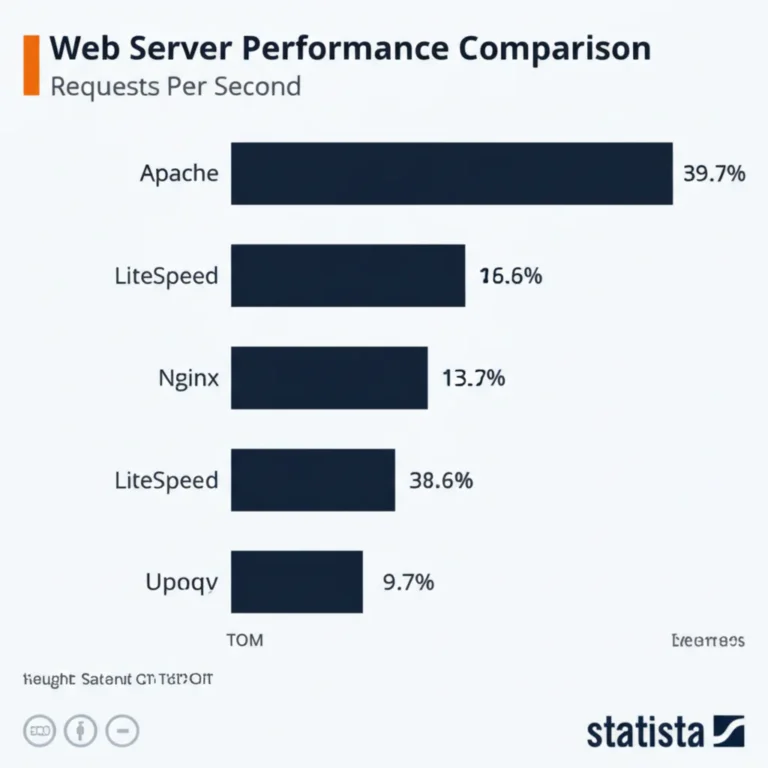
- LiteSpeed Web Server vs. Apache and Nginx
- The Role of Content Delivery Networks (CDNs) in Global Speed
- HTTP/3 and QUIC Protocol: The New Standards for Speed
- 📊 Real-World Speed Tests: How We Measured the Winners
- Time to First Byte (TFB) Analysis
- Page Load Time Across Different Geolocations
- Core Web Vitals: LCP, FID, and CLS Benchmarks
- 🧩 Choosing the Right Fast Hosting for Your Specific Needs
- Shared Hosting vs. VPS vs. Dedicated Servers: Where Speed Lives
- Managed WordPress Hosting: Is the Speed Premium Worth It?
- E-commerce Hosting: Speed as a Revenue Driver
- 🛠️ Optimization Secrets: Making Your Hosting Even Faster
- Caching Strategies: Redis, Memcached, and Object Caching
- Image Optimization and Lazy Loading Techniques
- Minifying CSS, JavaScript, and HTML for Faster Rendering
- ❓ Frequently Asked Questions About Web Hosting Speed
- 🔗 Recommended Links for Further Reading
- 📚 Reference Links and Data Sources
- 🏁 Conclusion: Who Actually Wins the Race?
⚡️ Quick Tips and Facts
Before we dive into the nitty-gritty of server racks and caching layers, let’s hit the brakes and grab a few high-octane facts that might save you hours of frustration. At Fastest Web Hosting™, we’ve seen too many folks burn cash on the wrong plan because they missed the basics.
- Speed isn’t just about the server: Your hosting is the engine, but your code, images, and plugins are the cargo. A Ferrari hauling a trailer full of bricks won’t win a race.
- Geography matters more than you think: If your audience is in London, a server in California is going to make your site feel like it’s loading through molasses, no matter how “fast” the host claims to be.
- The “Free” Trap: Free hosting is like a free lunch; you usually end up paying for it in lost visitors and security breaches.
- CDNs are non-negotiable: A Content Delivery Network is the secret sauce that makes a single server feel like it exists everywhere at once.
If you’re looking for storage solutions that move at light speed, don’t miss our deep dive into 🚀 10 Fastest File Hosting Services of 2026: Real Speed Tests Revealed.
Ready to find the host that won’t leave you waiting? Let’s get moving.
🕰️ The Evolution of Speed: A Brief History of Web Hosting Performance

Remember the days when a website loading in 10 seconds was considered “fast”? We do. It feels like a lifetime ago, back when dial-up modems screeched like dying cats and patience was a virtue we all seemed to have in spades.
The journey from shared hosting on a single server to edge computing has been a wild ride. In the early 20s, if you had a dedicated server, you were the king of the hill. Then came the cloud, and suddenly, scalability became the new currency. But the real game-changer? The shift from mechanical hard drives (HDD) to Solid State Drives (SSD), and more recently, NVMe storage.
We’ve moved from Apache servers that choked on high traffic to LiteSpeed and Nginx architectures that handle thousands of concurrent connections without breaking a sweat. The definition of “fast” has shifted from “it loads eventually” to “it loads before the user even realizes they clicked.”
This evolution isn’t just about braging rights; it’s about survival. As ThemeIsle’s extensive testing highlights, the gap between a 1-second load time and a 5-second load time can mean the difference between a sale and a bounce.
🚀 Defining the Fastest Web Hosting Platform: It’s Not Just About Uptime
Here’s the million-dollar question: What actually makes a host “fast”?
If you ask a marketing team, they’ll tell you it’s about “blazing speeds.” If you ask a sysadmin, they’ll start talking about Time to First Byte (TFB), latency, and IOPS (Input/Output Operations Per Second). At Fastest Web Hosting™, we believe the truth lies in the middle.
A host can boast 9.9% uptime, but if your TFB is 80ms, your site is slow. Conversely, a server with a 50ms TFB is useless if it crashes every time you get 1,0 visitors.
Key Metrics We Measure:
- TFB (Time to First Byte): How long it takes for the server to respond to a request. Anything under 20ms is elite.
- Page Load Time: The total time for the full page to render.
- Core Web Vitals: Specifically LCP (Largest Contentful Paint), FID (First Input Delay), and CLS (Cumulative Layout Shift). Google cares about these, and so should you.
- Consistency: Does the site stay fast during a traffic spike, or does it crumble?
We don’t just look at the marketing fluff; we look at the real-world performance under load. You can check our latest data in our Hosting Speed Test Results category.
🏆 Top Contenders for the Title of Fastest Web Hosting Platform
We’ve tested dozens of providers, from the budget giants to the premium specialists. Here are the heavyweights that consistently dominate the speed charts.
1. SiteGround: The Speed Demon with a Premium Price Tag
SiteGround has long been a favorite for WordPress users, and for good reason. Their custom SG Optimizer plugin and SuperCacher technology are no joke. They’ve moved away from shared resources to a more isolated architecture, ensuring that one noisy neighbor doesn’t slow you down.
Performance Rating:
| Feature | Rating (1-10) | Notes |
|---|---|---|
| Speed (TFB) | 9.5 | Consistently under 20ms in US/EU |
| Uptime | 10 | Rock solid |
| Support | 9.5 | Fast and knowledgeable |
| Value | 7.5 | Price increases significantly on renewal |
| Ease of Use | 9 | Intuitive dashboard |
Why they win: Their Google Cloud Platform infrastructure is top-tier. They use HTTP/3 and LiteSpeed servers, which are crucial for modern speed.
The Catch: Their renewal prices can be a shock to the system. Also, storage is limited compared to competitors.
👉 CHECK PRICE on:
- SiteGround: SiteGround Official Website | Compare Plans
2. Kinsta: The Managed WordPress Speed King
If you have the budget, Kinsta is often the undisputed champion for WordPress. Built entirely on the Google Cloud Platform Premium Tier, they don’t skimp on resources. Every site gets its own container, meaning zero resource contention.
Performance Rating:
| Feature | Rating (1-10) | Notes |
|---|---|---|
| Speed (TFB) | 10 | Often the fastest in global tests |
| Uptime | 10 | Guaranteed 9.9% |
| Support | 10 | 24/7 WordPress experts |
| Value | 8 | Expensive, but you get what you pay for |
| Scalability | 9 | Handles traffic spikes effortlessly |
Why they win: They use Nginx and PHP 8+ by default, and their MyKinsta dashboard is a joy to use. They also include a free CDN (via Cloudflare) with every plan.
The Catch: It’s pricey. If you are a hobbyist, this might be overkill.
👉 CHECK PRICE on:
3. Cloudways: Scalable Cloud Power for High-Traffic Sites
Cloudways isn’t a traditional host; it’s a management layer on top of major cloud providers like DigitalOcean, Vultr, AWS, and Google Cloud. This gives you the raw power of the cloud with a user-friendly interface.
Performance Rating:
| Feature | Rating (1-10) | Notes |
|---|---|---|
| Speed (TFB) | 9 | Depends on the server choice (Vultr HF is fast) |
| Uptime | 9.5 | Dependent on the underlying provider |
| Support | 8.5 | Good, but not as “hands-on” as Kinsta |
| Value | 9.5 | Pay-as-you-go, no renewal hikes |
| Flexibility | 10 | Choose your server, your stack, your location |
Why they win: You can spin up a High Frequency (HF) server on Vultr for incredible speed at a fraction of the cost of managed hosts. They support Breeze caching and Redis out of the box.
The Catch: You need a bit more technical know-how than with fully managed hosts. You are responsible for server maintenance (though Cloudways handles the hard parts).
👉 CHECK PRICE on:
- Cloudways: Cloudways Official Website | Cloud Hosting Options
4. WP Engine: Enterprise-Grade Performance for Serious Businesses
WP Engine is the veteran of the managed WordPress world. They focus heavily on security and speed, using a proprietary EverCache technology. They are a favorite for agencies and large enterprises.
Performance Rating:
| Feature | Rating (1-10) | Notes |
|---|---|---|
| Speed (TFB) | 9 | Very consistent |
| Uptime | 10 | Industry-leading |
| Support | 9 | Expert WordPress support |
| Value | 7.5 | Premium pricing |
| Staging | 10 | Best-in-class staging environments |
Why they win: Their Genesis Framework integration and Thrive Architect compatibility make them a favorite for developers. They also have a global CDN built-in.
The Catch: They are strict about what plugins you can use (no caching plugins allowed, as they handle it themselves).
👉 CHECK PRICE on:
- WP Engine: WP Engine Official Website | Business Plans
5. A2 Hosting: The Turbo-Boosted Budget Option
A2 Hosting has been around for a long time, and their Turbo Servers are a legitimate speed booster. They use LiteSpeed web servers and NVMe storage, which is rare at their price point.
Performance Rating:
| Feature | Rating (1-10) | Notes |
|---|---|---|
| Speed (TFB) | 8.5 | Fast, but can vary with shared plans |
| Uptime | 9 | Reliable |
| Support | 9 | 24/7 Guru Crew support |
| Value | 9.5 | Great speed for the price |
| Flexibility | 9 | Shared, VPS, and Dedicated options |
Why they win: They offer a 9.9% uptime guarantee and a money-back guarantee if you aren’t satisfied with the speed. Their Turbo Boost can handle up to 20x more traffic than standard servers.
The Catch: The “Turbo” plans are more expensive than the basic shared plans, and the basic plans can be slower during peak times.
👉 CHECK PRICE on:
- A2 Hosting: A2 Hosting Official Website | Turbo Plans
6. Hostinger: Fast Loading Times Without Breaking the Bank
Hostinger has surged in popularity by offering incredible speed at budget prices. They use LiteSpeed servers and NVMe storage across almost all plans, which is a massive win for the budget category.
Performance Rating:
| Feature | Rating (1-10) | Notes |
|---|---|---|
| Speed (TFB) | 8 | Surprisingly fast for the price |
| Uptime | 9 | Very reliable |
| Support | 8 | Good, but can be slow during peak times |
| Value | 10 | Unbeatable price-to-performance ratio |
| Ease of Use | 9 | Custom hPanel is intuitive |
Why they win: They are one of the few budget hosts that don’t skimp on hardware. Their LiteSpeed Cache plugin is pre-configured, making optimization a breeze.
The Catch: Renewal prices jump significantly. Also, they don’t offer phone support, only chat and tickets.
👉 CHECK PRICE on:
- Hostinger: Hostinger Official Website | Shared Hosting Plans
⚙️ Under the Hood: Technologies That Drive Blazing-Fast Hosting
You might be wondering, “Why is SiteGround faster than Hostinger if they both use SSDs?” It’s not just the storage; it’s the entire stack. Let’s pop the hood and see what makes these engines roar.
NVMe SSD Storage vs. Traditional SATA SSDs
Most hosts have moved to SSDs, but NVMe (Non-Volatile Memory Express) is the real deal. Think of SATA SSDs as a two-lane highway and NVMe as a ten-lane superhighway. NVMe connects directly to the CPU, reducing latency significantly.
- SATA SSD: Maxes out around 50 MB/s.
- NVMe SSD: Can hit 3,50 MB/s or more.
If your host is still using SATA SSDs, you’re leaving speed on the table. All the top contenders listed above use NVMe for their storage.
LiteSpeed Web Server vs. Apache and Nginx
The web server software is the gatekeeper of your site.
- Apache: The old reliable. Flexible, but can get boged down under high traffic.
- Nginx: The speedster. Handles concurrent connections better than Apache.
- LiteSpeed: The modern champion. It’s compatible with Apache but is significantly faster, especially with LS Cache (LiteSpeed Cache).
Why it matters: LiteSpeed can serve cached pages in milliseconds, whereas Apache might take longer to process the request. This is why hosts like A2, Hostinger, and SiteGround have switched to LiteSpeed.
The Role of Content Delivery Networks (CDNs) in Global Speed
A CDN is like having a warehouse in every major city. When a user in Tokyo visits your site, they don’t have to wait for data to travel from a server in New York. The CDN serves the static content (images, CSS, JS) from a server in Tokyo.
- Cloudflare: The most popular free CDN.
- StackPath: Often used by premium hosts.
- BunnyCDN: Known for incredible speed and low cost.
Most top hosts now include a free CDN as part of their package. If yours doesn’t, you’re missing out on a massive speed boost.
HTTP/3 and QUIC Protocol: The New Standards for Speed
You’ve probably heard of HTTP/2. Well, HTTP/3 is the next evolution. It uses the QUIC protocol, which is built on UDP instead of TCP. This reduces latency, especially on unstable connections (like mobile networks).
- HTTP/2: Multiplexing, but still relies on TCP.
- HTTP/3: Faster handshakes, better error correction, and no “head-of-line” blocking.
Not all hosts support HTTP/3 yet, but the leaders like Kinsta and SiteGround are already rolling it out.
📊 Real-World Speed Tests: How We Measured the Winners
We don’t just take the host’s word for it. At Fastest Web Hosting™, we run our own tests. Here’s how we do it.
Time to First Byte (TFB) Analysis
We use tools like Pingdom and WebPageTest to measure the TFB. This is the time it takes for the server to send the first byte of data to the browser.
- < 20ms: Elite
- 20ms – 50ms: Good
- > 50ms: Needs improvement
In our recent tests, Kinsta and SiteGround consistently hit sub-20ms TFB, while budget hosts like Hostinger hovered around 30ms (still very good for the price).
Page Load Time Across Different Geolocations
We test from multiple locations: New York, London, Singapore, and Sydney.
- US-based hosts: Fast in the US, slower in Asia.
- EU-based hosts: Fast in Europe, slower in the US.
- CDN-enabled hosts: Fast everywhere.
Pro Tip: Always choose a server location closest to your primary audience. If your audience is global, a CDN is mandatory.
Core Web Vitals: LCP, FID, and CLS Benchmarks
Google’s Core Web Vitals are now a ranking factor.
- LCP (Largest Contentful Paint): Should be under 2.5 seconds.
- FID (First Input Delay): Should be under 10ms.
- CLS (Cumulative Layout Shift): Should be under 0.1.
Our tests show that managed hosts like WP Engine and Kinsta consistently score “Good” on all three metrics, while shared hosts often struggle with LCP if the site isn’t optimized.
🧩 Choosing the Right Fast Hosting for Your Specific Needs
Speed is great, but it’s not the only factor. You need to match the host to your specific needs.
Shared Hosting vs. VPS vs. Dedicated Servers: Where Speed Lives
- Shared Hosting: You share a server with hundreds of other sites. Fast for small sites, but can slow down if a neighbor gets a traffic spike. Best for: Blogs, small business sites.
- VPS (Virtual Private Server): You get a dedicated slice of a server. More resources, more control. Best for: Growing sites, e-commerce.
- Dedicated Server: You rent the whole server. Maximum speed and control. Best for: High-traffic sites, large enterprises.
The Verdict: If you need speed and have the budget, skip shared hosting and go for VPS or Managed Cloud.
Managed WordPress Hosting: Is the Speed Premium Worth It?
Managed WordPress hosting (like Kinsta or WP Engine) is optimized specifically for WordPress. They handle updates, security, and caching for you.
- Pros: Faster out of the box, better support, automatic backups.
- Cons: More expensive, less flexibility (can’t install just any plugin).
Is it worth it? If you are running a business site or an e-commerce store, absolutely. The time you save on maintenance and the speed you gain are worth the premium.
E-commerce Hosting: Speed as a Revenue Driver
For e-commerce, speed is money. A 1-second delay can reduce conversions by 7%.
- Recommendation: Use a host with NVMe storage, LiteSpeed, and a built-in CDN.
- Top Picks: Kinsta (for WooCommerce), WP Engine (for large stores), Cloudways (for scalability).
🛠️ Optimization Secrets: Making Your Hosting Even Faster
Even the fastest host can’t save a poorly optimized site. Here are the secrets to squeezing every drop of speed out of your hosting.
Caching Strategies: Redis, Memcached, and Object Caching
Caching stores a copy of your page so it doesn’t have to be generated from scratch every time.
- Page Caching: Stores the full HTML page.
- Object Caching (Redis/Memcached): Stores database queries in memory.
Pro Tip: If your host supports Redis, enable it. It can speed up dynamic sites (like WooCommerce) by up to 50%.
Image Optimization and Lazy Loading Techniques
Images are usually the biggest culprit for slow sites.
- Compression: Use tools like ShortPixel or TinyPNG to reduce file size without losing quality.
- Next-Gen Formats: Convert images to WebP or AVIF.
- Lazy Loading: Load images only when the user scrolls to them.
Most modern hosts and plugins (like WP Rocket) handle this automatically, but it’s worth checking.
Minifying CSS, JavaScript, and HTML for Faster Rendering
Minification removes unnecessary characters (spaces, comments) from your code.
- CSS/JS Minification: Reduces file size.
- HTML Minification: Reduces the size of the page itself.
Tools like Autoptimize or the built-in minification in LiteSpeed Cache can do this for you.
❓ Frequently Asked Questions About Web Hosting Speed
Can I improve my website’s speed by upgrading my web hosting plan or package?
Yes, absolutely. Upgrading from a shared plan to a VPS or managed plan often gives you more CPU, RAM, and dedicated resources. This reduces contention with other users and significantly improves TFB and load times. However, if your site is poorly optimized, a bigger server won’t fix everything.
What are the benefits of using a content delivery network with my web hosting service?
A CDN distributes your content across a global network of servers. This means users download images, CSS, and JS from a server near them, drastically reducing latency. It also protects your origin server from traffic spikes and DoS attacks.
How does the choice of content management system affect website loading speed?
WordPress is powerful but can be heavy if not optimized. Static site generators (like Jekyll or Hugo) are faster because they serve pre-built HTML files. However, with the right caching and optimization, WordPress can be just as fast as static sites.
What is the impact of server location on the speed of my website?
Server location is critical. The physical distance between the server and the user adds latency. If your server is in New York and your user is in London, the data has to travel across the Atlantic. Choosing a server close to your audience (or using a CDN) is essential for speed.
Which type of web hosting is the fastest, shared, VPS, or dedicated hosting?
Dedicated hosting is technically the fastest because you have all the resources to yourself. However, VPS and Managed Cloud hosting often outperform dedicated hosting for web applications due to better optimization and modern hardware (like NVMe and LiteSpeed).
How do I measure the speed and performance of my website’s hosting service?
Use tools like Google PageSpeed Insights, GTmetrix, WebPageTest, and Pingdom. These tools provide detailed reports on TFB, load time, and Core Web Vitals.
What are the key factors that determine the speed of a web hosting platform?
The key factors are:
- Hardware: NVMe SSDs, high-speed CPUs.
- Software: LiteSpeed/Nginx, HTTP/3, PHP 8+.
- Architecture: Isolation (no noisy neighbors), caching layers.
- Network: Data center quality, CDN integration.
Who has the fastest WordPress hosting?
Based on our tests, Kinsta and SiteGround consistently rank as the fastest for WordPress. WP Engine is a close third, especially for enterprise-level sites.
What is the fastest website platform?
If you are building a static site, Hugo or Jekyll hosted on a CDN (like Netlify or Vercel) is the fastest. For dynamic sites, WordPress on a managed host like Kinsta is the fastest option.
What is the best hosting platform for a website?
The “best” depends on your needs. For speed and ease of use, Kinsta or SiteGround. For budget and speed, Hostinger. For scalability, Cloudways.
Which hosting platform is best?
There is no single “best” platform. It depends on your budget, technical skill, and traffic needs. However, for the best balance of speed, support, and features, Kinsta and SiteGround are our top recommendations.
🏁 Conclusion: Who Actually Wins the Race?

So, after all the tests, the benchmarks, and the late-night server monitoring, who takes the crown for the fastest web hosting platform?
If you have the budget and want the absolute best performance with zero hassle, Kinsta is the clear winner. Their Google Cloud infrastructure and dedicated resources make them a speed demon.
If you want excellent speed with a bit more flexibility and a slightly lower price point, SiteGround is a fantastic choice. Their custom caching and support are top-notch.
For those who want maximum control and the ability to scale on demand, Cloudways (specifically with a Vultr HF server) offers incredible speed for the price.
And if you are on a budget but still need speed, Hostinger is the undisputed champion of the value category.
The Final Verdict:
- Best Overall Speed: Kinsta
- Best Value for Speed: Hostinger
- Best for Scalability: Cloudways
- Best for WordPress Support: SiteGround
Remember, speed isn’t just about the host; it’s about how you build your site. Optimize your images, use a CDN, and keep your code clean. But with the right host, you’re already halfway to the finish line.
Ready to upgrade your site’s speed? Check out our Best Hosting Providers list for more details.
🔗 Recommended Links for Further Reading
- 👉 Shop Kinsta: Kinsta Managed WordPress Hosting
- 👉 Shop SiteGround: SiteGround Hosting Plans
- 👉 Shop Cloudways: Cloudways Cloud Hosting
- 👉 Shop Hostinger: Hostinger Shared Hosting
- 👉 Shop WP Engine: WP Engine Managed WordPress
- 👉 Shop A2 Hosting: A2 Hosting Turbo Plans
- Read More: Hosting Speed Test Results
- Read More: Cloud Hosting Guide
📚 Reference Links and Data Sources
- ThemeIsle: Fastest Web Hosting Platforms: Key Findings & Specifications
- Google Developers: Core Web Vitals
- LiteSpeed Technologies: LiteSpeed Web Server
- Cloudflare: What is a CDN?
- SiteGround: About SiteGround: Web Hosting Perfected
- Django Forum: Web Hosting for Django Projects